After talking about air and light, it’s time to discuss water. Water is the single largest substance you consume every day. Two to three liters a day adds up to roughly a ton per year. Small adjustments to your drinking habits may seem insignificant in the moment, but over decades, they can leave a surprisingly deep imprint on your health.
Today, I’m skipping the complicated theory. Instead, let’s focus on five practical actions almost everyone can take — low cost, high return.
Drinking Water at Home: Filter It and Drink It Fresh
Municipal tap water in most cities already goes through multiple treatment steps and is generally safe. If you want to further improve water quality, however, installing a filtration system is often the more robust option.
Many people assume that once water is boiled, it becomes completely safe. Boiling does kill bacteria and most microorganisms. But when it comes to dissolved contaminants such as heavy metals or certain disinfection byproducts, boiling is not an effective solution 1,20.
Boiling can handle microbes. It cannot handle chemical contamination.
What about water dispensers?
The water itself may be perfectly fine. The problem is often the dispenser. Without regular cleaning, the spout, reservoir, and tubing can become ideal breeding grounds for bacteria 2,21. What you think is purified water may actually be flowing through a machine that hasn’t been cleaned in months.
From a Prime Life perspective, the bigger concern is chronic, low-dose chemical exposure. These exposures rarely cause immediate symptoms, but over decades they may quietly increase the risk of chronic disease.
A basic filtration system, combined with the habit of drinking filtered water promptly rather than storing it for extended periods, is usually enough to reduce that risk to a very low level.
Water Filters: Don’t Forget the Cartridge
I strongly recommend installing a water filter at home. Modern filtration systems offer an excellent cost-to-benefit ratio.
The type of filter you choose depends on the problem you are trying to solve 22,23:
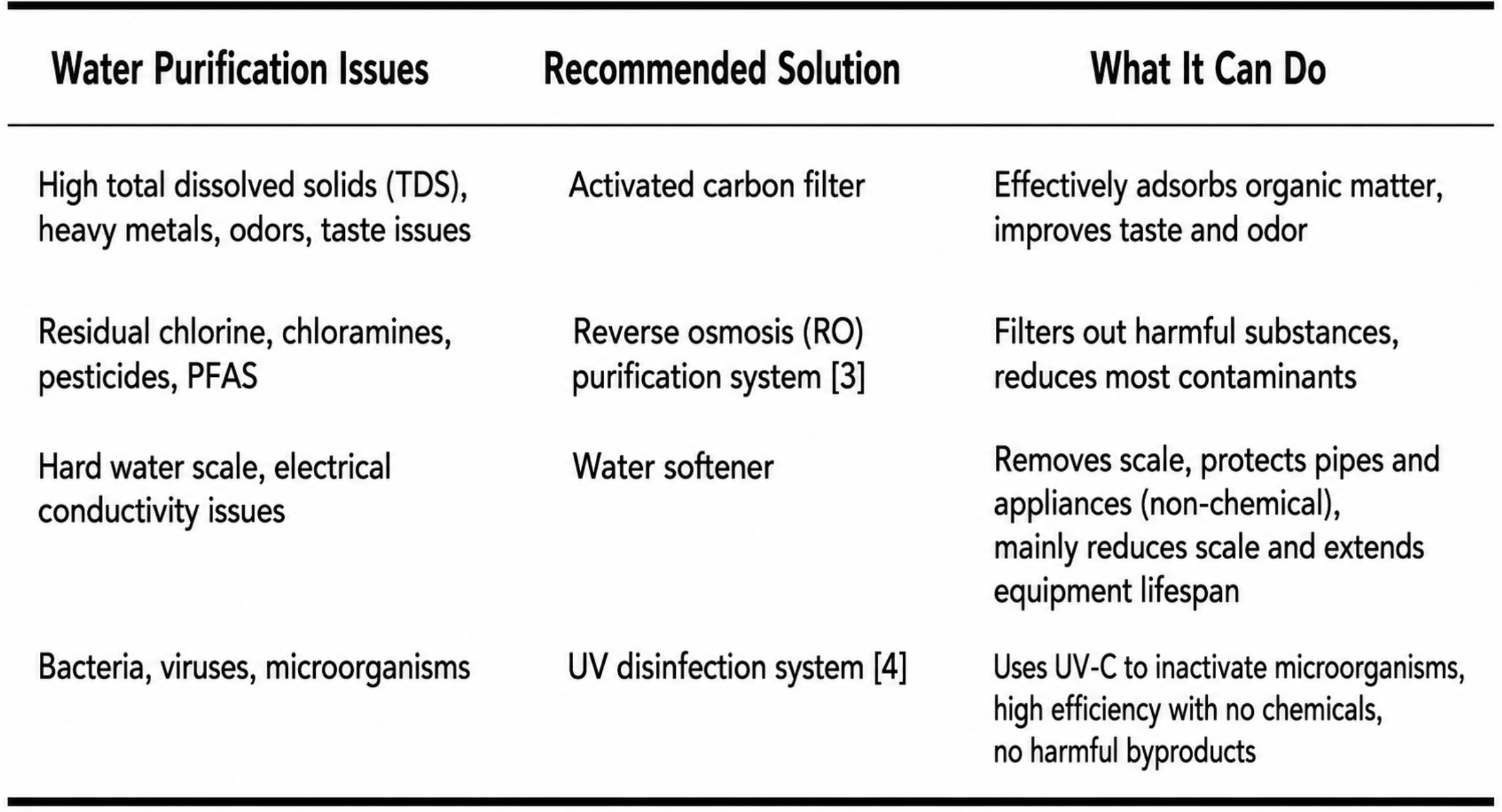
Many modern systems combine multiple filtration layers, improving taste, reducing heavy metals, and limiting microbial growth at the same time. Spread over daily use, the cost may amount to only a few cents per day. Most reputable brands now offer solid performance.
The more important issue is not the specifications — it’s the filter lifespan.
An overdue filter cartridge may not only lose filtration capacity, but can also become a secondary source of contamination. Biofilms can form, trapped contaminants can be released back into the water, and bacteria can multiply inside the filter.
Replacing cartridges on schedule may be one of the highest-ROI health investments you can make.
Bottled Water: Don’t Leave It in the Sun
Buying a bottle of water while you’re out is perfectly reasonable. The key is not to leave plastic bottles sitting in hot, sun-exposed environments for extended periods.
Physical stress, such as squeezing bottles, may increase the release of plastic particles 5. Heat, UV exposure, and long-term storage are also believed to accelerate material degradation and particle shedding 24.
Researchers at Columbia University detected large numbers of nanoplastic particles in bottled water 6. Other reviews suggest that microplastics and nanoplastics can cross cellular membranes and enter tissues, cells, and the bloodstream in animal and laboratory studies, where they may persist for long periods without effective degradation 7. Science has not yet reached a final verdict on the long-term health effects of nanoplastics. But not every risk requires absolute certainty before we begin avoiding it 25,26,27.
These are synthetic substances that nature has little capacity to process. It makes sense to minimize unnecessary exposure whenever possible.
Beyond the plastics themselves, it’s worth understanding the chemical additives often found in plastic products.
BPA, commonly associated with hard plastic containers and can linings, may affect endocrine function and hormone balance 8,28,30.
Phthalates, often found in soft plastics and packaging films, may interfere with reproductive hormones and metabolic regulation 9,31,32.
Without sacrificing convenience, there are several simple things you can do:
- Avoid repeatedly reusing disposable plastic bottles and cups.
- Use glass or stainless-steel containers at home whenever practical.
- Don’t leave bottled water in cars or direct sunlight.
- When buying bottled water, choose newer stock whenever possible.
If You Live in an Older Home: Let the Water Run First
This one is especially relevant if you live in an older building.
When you wake up in the morning, don’t drink the first water that comes out of the tap. Let it run for about 30 seconds to a minute first.
The reason is lead.
Older plumbing, lead-based solder, and some older faucet designs may contain lead (if concerned, you can always arrange a water-quality test). Water that sits in pipes overnight has more time to interact with these materials, increasing the likelihood of lead leaching 10.
Public health agencies commonly recommend flushing stagnant water before drinking to reduce lead exposure 11.
Another simple tip:
Use cold tap water for drinking and cooking.
Avoid water from the hot-water tap. Hot water spends more time in heaters and plumbing systems, and higher temperatures tend to increase metal leaching 29.
Asking everyone to conduct comprehensive water testing may be unrealistic.
But flushing the tap and using cold water costs nothing and can meaningfully reduce exposure.
Lead is a well-established neurotoxin, and its effects on cognition accumulate over time 12. That’s exactly the type of risk Prime Life focuses on: invisible today, expensive decades later.
“Structured Water,” “Energy Water,” and “Magnetized Water”: Save Your Money
Structured water. Energy water. Magnetized water.
You’ve probably seen these terms in advertisements. Most are marketing concepts, and there is currently no reliable scientific evidence showing additional health benefits [33–35].
Alkaline water is perfectly drinkable, but there’s no reason to treat it as magical. At present, there is no convincing long-term human evidence showing that alkaline water can change an “acidic body state,” nor is there reliable evidence that it delivers meaningful long-term health benefits. The human body maintains blood pH through an extraordinarily sophisticated buffering system. What you drink has very limited influence on blood pH 13,14.
Some small studies have reported that alkaline electrolyzed water or hydrogen-rich alkaline water may improve gastrointestinal symptoms, post-exercise acid-base markers, or certain short-term physiological measures. But these studies do not demonstrate long-term improvements in health, aging, disease prevention, or overall physiology. More importantly, many studies combine multiple variables — pH, mineral content, hydrogen concentration, and the properties of electrolyzed-reduced water — making it difficult to attribute any benefit specifically to alkalinity itself 36,37.
Mineral water is perfectly fine to drink, and some natural mineral waters do contain beneficial minerals. The key caveat is price. Most of those minerals can be obtained through a normal diet. There is little reason to pay a large premium for marketing terms like “source region,” “spring origin,” or “high-altitude water.”
There is, however, one category of “functional water” worth discussing separately: Electrolyte drinks. After substantial sweating — during intense exercise, sauna sessions, or work in hot environments — plain water alone may not be enough. Sweat removes more than water. It also carries away sodium, potassium, magnesium, and other electrolytes. These minerals play critical roles in nerve signaling, muscle contraction, and fluid balance 15. If you lose large amounts of sweat and then replace it only with large volumes of plain water, electrolyte concentrations can become diluted, leading to dizziness, muscle cramps, or even hyponatremia in severe cases 16. Supplementing electrolytes after exercise or sauna use has a strong physiological rationale 17.
What I do not recommend is treating electrolyte drinks as your everyday water source. Given the already high sodium intake in most modern diets, chronic overconsumption of electrolyte beverages can easily push sodium intake above recommended levels. Sustained sodium intake above 2,000 mg per day (the WHO recommended upper limit) is associated with higher blood pressure and increased cardiovascular risk 18. Likewise, excessive potassium intake may be dangerous for individuals with impaired kidney function, potentially leading to hyperkalemia, arrhythmias, or even cardiac arrest 19.
In reality, drinking fewer sugary beverages, reducing plastic exposure, filtering your water, and replacing filter cartridges on time will deliver far greater long-term returns than any “miracle water” ever could.
Summary
- Install a basic home filtration system and drink filtered water promptly.
- If you use a water dispenser, clean the reservoir and tubing regularly — don’t let it become a bacterial incubator.
- Bottled water is fine when you’re out, but avoid prolonged heat and sunlight exposure. At home, choose glass or stainless-steel containers whenever possible.
- If you live in an older home, let the tap run for about 30 seconds before collecting water in the morning, and use cold water for both cooking and drinking.
- The most important part of owning a water filter is replacing the cartridge on schedule. An expired filter can lose effectiveness and may even degrade water quality.
- Electrolyte drinks have real value after exercise and heavy sweating. “Structured water,” “energy water,” and similar concepts are generally not worth paying for.
Intervention recommendations are geared toward generally healthy individuals. If you have existing health conditions, always follow your doctor’s instructions.
References
[1]Croll BT. The removal of trihalomethanes by boiling water. Water Res. 1984;18(8):1075–8.
[2]Allen MJ, Edberg SC, Reasoner DJ. Heterotrophic plate count bacteria — what is their significance in drinking water?. Int J Food Microbiol. 2004 Feb;92(3):265–74.
[3]Greenlee LF, Lawler DF, Freeman BD, Marrot B, Moulin P. Reverse osmosis desalination: water sources, technology, and today’s challenges. Water Res. 2009 Jun;43(9):2317–48.
[4]Hijnen WA, Beerendonk EF, Medema GJ. Inactivation credit of UV radiation for viruses, bacteria and protozoan (oo)cysts in water: a review. Water Res. 2006 Jan;40(1):3–22.
[5]Sobhani Z, Lei Y, Tang Y, Wu L, Zhang X, Naidu R, Megharaj M, Fang C. Microplastics generated when opening plastic packaging. Sci Rep. 2020 Mar;10(1):4841.
[6]Qian N, Gao X, Lang X, Deng H, Bratu TM, Chen Q, Stapleton P, Yan B, Min W. Rapid single-particle chemical imaging of nanoplastics by SRS microscopy. Proc Natl Acad Sci U S A. 2024 Jan;121(3):e2300582121.
[7]Yong CQY, Valiyaveettil S, Tang BL. Toxicity of Microplastics and Nanoplastics in Mammalian Systems. Int J Environ Res Public Health. 2020 Mar;17(5):1509.
[8]Rubin BS. Bisphenol A: an endocrine disruptor with widespread exposure and multiple effects. J Steroid Biochem Mol Biol. 2011 Oct;127(1–2):27–34.
[9]Meeker JD, Sathyanarayana S, Swan SH. Phthalates and other additives in plastics: human exposure and associated health outcomes. Philos Trans R Soc Lond B Biol Sci. 2009 Jul;364(1526):2097–113.
[10]Lytle DA, Schock MR. Impact of stagnation time on metal dissolution from plumbing materials in drinking water. J Water Supply Res Technol AQUA. 2000;49(5):243–257.
[11]Triantafyllidou S, Edwards M. Lead (Pb) in tap water and in blood: implications for lead exposure in the United States. Crit Rev Environ Sci Technol. 2012;42(13):1297–352.
[12]Lanphear BP, Hornung R, Khoury J, Yolton K, Baghurst P, Bellinger DC, Canfield RL, Dietrich KN, Bornschein R, Greene T, Rothenberg SJ, Needleman HL, Schnaas L, Wasserman G, Graziano J, Roberts R. Low-level environmental lead exposure and children’s intellectual function: an international pooled analysis. Environ Health Perspect. 2005 Jul;113(7):894–9.
[13]Fenton TR, Huang T. Systematic review of the association between dietary acid load, alkaline water and cancer. BMJ Open. 2016 Jun;6(6):e010438.
[14]Hamm LL, Nakhoul N, Hering-Smith KS. Acid-Base Homeostasis. Clin J Am Soc Nephrol. 2015 Dec;10(12):2232–42.
[15]Sawka MN, Burke LM, Eichner ER, Maughan RJ, Montain SJ, Stachenfeld NS. American College of Sports Medicine position stand. Exercise and fluid replacement. Med Sci Sports Exerc. 2007 Feb;39(2):377–90.
[16]Almond CS, Shin AY, Fortescue EB, Mannix RC, Wypij D, Binstadt BA, Duncan CN, Olson DP, Salerno AE, Newburger JW, Greenes DS. Hyponatremia among runners in the Boston Marathon. N Engl J Med. 2005 Apr;352(15):1550–6.
[17]Shirreffs SM, Sawka MN, Stone M. Water and electrolyte needs for football training and match-play. J Sports Sci. 2006 Jul;24(7):699–707.
[18]He FJ, Li J, Macgregor GA. Effect of longer term modest salt reduction on blood pressure: Cochrane systematic review and meta-analysis of randomised trials. BMJ. 2013 Apr 3;346:f1325.
[19]Palmer BF. Regulation of Potassium Homeostasis. Clin J Am Soc Nephrol. 2015 Jun;10(6):1050–60.
[20]Krasner SW, Wright JM. The effect of boiling water on disinfection by-product exposure. Water Res. 2005 Mar;39(5):855–864.
[21]Sacchetti R, De Luca G, Dormi A, Guberti E, Zanetti F. Microbial quality of drinking water from microfiltered water dispensers. Int J Hyg Environ Health. 2014;217(2–3):255–259.
[22]EPA WaterSense Guide to Selecting Water Treatment Systems
[23]EPA Identifying Drinking Water Filters Certified to Reduce PFAS
[24]Hu J, Wu Y, Wang J, Li Z, Fan J, Jin Y, et al. Unraveling microplastics release in bottled water under in-vehicle conditions using carbon quantum dots. J Hazard Mater. 2025;496:139200.
[25]Leslie HA, van Velzen MJM, Brandsma SH, Vethaak AD, Garcia-[26]Vallejo JJ, Lamoree MH. Discovery and quantification of plastic particle pollution in human blood. Environ Int. 2022 May;163:107199.
[27]FDA Microplastics and Nanoplastics in Foods
[28]National Institute of Environmental Health Secience Bisphenol A (BPA)
[29]EPA Basic Information about Lead in Drinking Water
[30]Rubin BS. Bisphenol A: an endocrine disruptor with widespread exposure and multiple effects. J Steroid Biochem Mol Biol. 2011 Oct;127(1–2):27–34.
[31]Radke EG, Braun JM, Meeker JD, Cooper GS. Phthalate exposure and male reproductive outcomes: A systematic review of the human epidemiological evidence. Environ Int. 2018 Dec;121(Pt 1):764–793.
[32]Radke EG, Galizia A, Thayer KA, Cooper GS. Phthalate exposure and metabolic effects: a systematic review of the human epidemiological evidence. Environ Int. 2019 Nov;132:104768.
[33]Zhang S, Zhang Y, Wu C, Yang H, Zhang Q, Wang F, Wang J, Gates I, Wang J. A Facile Strategy to Prepare Small Water Clusters via Interacting with Functional Molecules. Int J Mol Sci. 2021 Jul 31;22(15):8250.
[34]Federal Trade Commission-Health Products Compliance Guidance
[35]Lee HJ, Kang MH. Effect of the magnetized water supplementation on blood glucose, lymphocyte DNA damage, antioxidant status, and lipid profiles in STZ-induced rats. Nutr Res Pract. 2013 Feb;7(1):34–42.
[36]LeBaron TW, Sharpe R, Ohno K. Electrolyzed-Reduced Water: Review I. Molecular Hydrogen Is the Exclusive Agent Responsible for the Therapeutic Effects. Int J Mol Sci. 2022 Nov 25;23(23):14750.
[37]Tanaka Y, Saihara Y, Izumotani K, Nakamura H. Daily ingestion of alkaline electrolyzed water containing hydrogen influences human health, including gastrointestinal symptoms. Med Gas Res. 2019 Jan 9;8(4):160–166.