AI-generated illustration
When I first encountered the claim that hypoxia could be a form of hormesis, I found it hard to believe. Cold, heat, exercise, and fasting are all “micro-stressors” whose long-term benefits feel at least somewhat intuitive. But the idea that too little oxygen could also be beneficial seemed extraordinary.
The evidence, however, is real—including the science recognized by the 2019 Nobel Prize in Physiology or Medicine—so I had to set intuition aside and follow the biology [1].
Today, we are heading into the deep end of hormesis to ask a more precise question: under what constraints can a low-oxygen environment become a useful micro-stressor?
Hypoxia: A Stimulus That Requires Precise Dosing
When cells sense insufficient oxygen, they activate a master switch called HIF, or hypoxia-inducible factor [2]. The discovery of this mechanism was recognized with the 2019 Nobel Prize in Physiology or Medicine [1]. Low oxygen stabilizes HIF, which then turns on programs for red-blood-cell production, new blood-vessel growth, and metabolic switching [3]. But this switch is not meant to stay on indefinitely: chronic abnormal activation is linked to pulmonary hypertension and cancer [3].
HIF describes a neutral physiological fact. It operates whenever oxygen is scarce, whether the result is healthy adaptation or a pathological state such as cancer, OSA, or pulmonary hypertension. Its dose-response relationship nevertheless resembles the classic hormetic curve: moderate activation may be beneficial, whereas excessive or prolonged activation creates harmful stress.
The blood-building pathway requires a substantial dose. Hypoxia prompts the kidneys to release EPO (erythropoietin), increasing red-blood-cell production and the blood’s oxygen-carrying capacity [4][5]. But this does not happen in a few days. Meaningful hematologic adaptation generally requires at least three accumulated weeks, long daily exposures, and a simulated altitude of roughly 2,000–2,500 meters before red-cell mass or hemoglobin mass rises modestly [6][7].
On the metabolic side, combining hypoxia with exercise may improve capillary density and mitochondrial efficiency more than passive exposure to a low-oxygen environment alone [8].
Moderate, brief, intermittent hypoxia—such as breathing air with a somewhat lower oxygen concentration—may produce benefits. Severe, chronic, or violently fluctuating hypoxia causes injury [9].
Intermittent hypoxic training often targets an SpO₂ (pulse oxygen saturation) nadir of about 85–90%. In contrast, a person with sleep apnea may repeatedly fall below 70% during a single night. That is the difference between “good” and “bad” hypoxia [9][21].
How to Create a Hypoxic Environment: Altitude Training
Altitude naturally creates hypoxia. Competitive sports have developed several established approaches to capturing its training effects [6][7]:
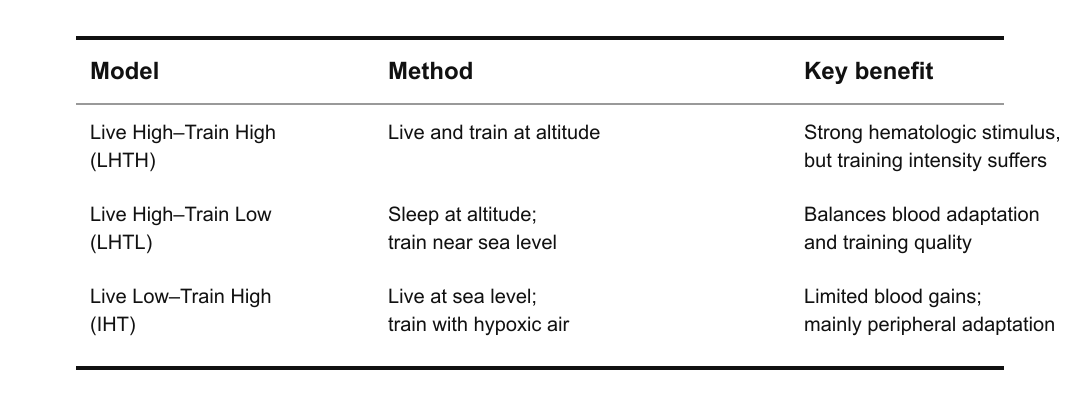
LHTL can improve endurance, but individual responses vary considerably [6][7]. Sleeping at altitude can also cause repeated oxygen desaturation, poorer sleep, and even periodic breathing or central sleep apnea [10].
The same SpO₂ can represent very different physiological stress in different people, depending on age, cardiopulmonary history, and anemia. For someone with heart or lung disease, falling below 90% may already be unsafe. Moreover, abruptly restoring oxygen after hypoxia can generate a burst of reactive oxygen species. This reoxygenation-reperfusion injury is a major mechanism behind many forms of hypoxic damage [12][13].
Altitude training is not a perfect hypoxia model, either. High altitude also adds low barometric pressure, cold, dry air, and intense ultraviolet exposure. It may improve hemoglobin capacity, but once those other stressors are included, the net effect is difficult to judge. For most people, high altitude is not an especially safe or friendly environment.
Is there a safer way to train under hypoxia? One option is intermittent hypoxia-hyperoxia training (IHHT).
IHHT: Intermittent Hypoxia and Reoxygenation at Normal Barometric Pressure
To capture some of the adaptation associated with altitude while remaining at normal barometric pressure and sea-level surroundings, some longevity enthusiasts use IHHT devices—intermittent hypoxia-hyperoxia training [14]. The goal is to avoid the downsides of real altitude, including acute mountain sickness, cold, ultraviolet exposure, travel cost, and sleep disruption.
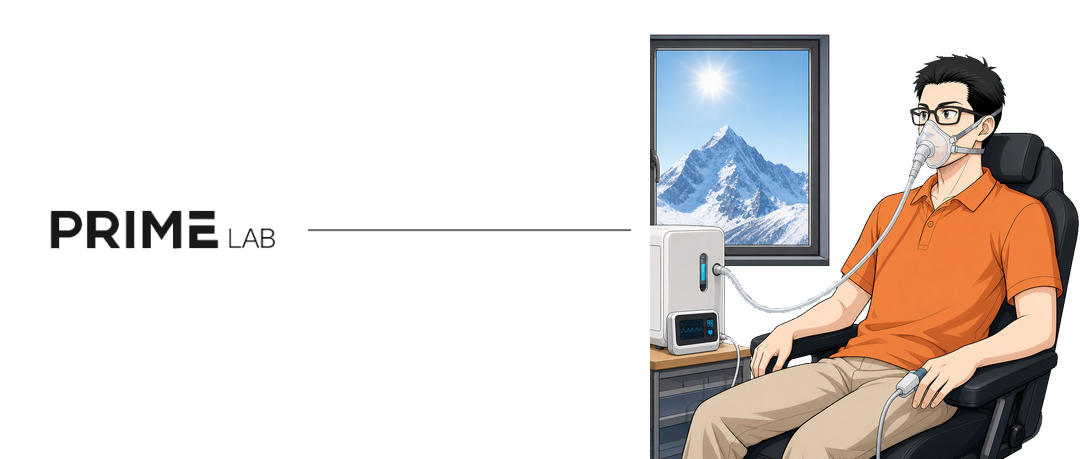
These devices simulate altitude by reducing the fraction of inspired oxygen (FiO₂) without changing barometric pressure—a condition known as normobaric hypoxia—while continuously monitoring SpO₂ with a pulse oximeter [14]:
- You wear a mask and enter the hypoxic phase, during which SpO₂ gradually falls.
- When SpO₂ reaches a preset threshold—often around 90%, and lower in some protocols—the device automatically switches to normal or oxygen-enriched air for the reoxygenation or hyperoxic phase.
- Once SpO₂ returns to normal, the next hypoxic phase begins.
- This cycle repeats, which is why the method is called intermittent hypoxia-hyperoxia training.
A session typically alternates several minutes of hypoxia with several minutes of reoxygenation over multiple cycles, for a total of about 30–60 minutes [14].
These devices are generally used in two ways:
Resting mode: You wear the mask while reading or resting and passively receive the hypoxia-reoxygenation stimulus.
Exercise mode: The system is combined with aerobic exercise such as cycling or treadmill work. Exercise deepens desaturation and shortens the time needed to reach the threshold, theoretically adding peripheral and mitochondrial adaptation.
IHHT often uses an oxygen concentration above normal ambient levels during reoxygenation. That differs from classic altitude training, where the transition is from hypoxia back to normal air. Manufacturers argue that hyperoxia accelerates recovery and permits more cycles. Some researchers, however, worry that rapid, repeated switching between low and high oxygen may itself intensify oxidative stress. After all, a sudden return of oxygen and the resulting reactive oxygen species are central to reperfusion injury. On that spectrum, IHHT may resemble the oscillation seen in OSA more than the gradual adaptation seen at altitude [12-14]. This is the main mechanistic distinction between IHHT and traditional hypoxic tents or altitude camps—and the source of much of the controversy.
Current human evidence for IHHT is dominated by small, short-duration studies, many emerging from Russian and Eastern European clinical traditions and a handful of European research groups. They report possible improvements in cardiovascular function, metabolism, exercise tolerance, and cognition, but large, rigorously blinded randomized controlled trials are lacking. Effect sizes and long-term safety remain uncertain [14]. An automatic switch at SpO₂ 90% does add a safety buffer, but caution is still warranted for anyone with undiagnosed cardiopulmonary disease, anemia, or OSA. IHHT is an advanced option, not a substitute for foundational training, treatment of sleep disorders, or assessment of iron status and cardiopulmonary health [9][14][21][27].
Creating Hypoxia Through Breathing: Breath Holds and the Safety Red Line
The Wim Hof breathing method cycles hyperventilation with breath holds, and it can briefly lower SpO₂. Its principal effects, however, appear to involve adrenaline release and autonomic regulation. In one small randomized trial, the complete Wim Hof training protocol reduced the inflammatory response induced by endotoxin [15].
The hypoxia produced by a breath hold is brief and self-limiting. There is no evidence that it creates lasting improvements in athletic performance or hemoglobin. The useful component may come from sympathetic activation rather than hypoxia itself [15].
Breathing practices carry one major risk: carbon dioxide. Hyperventilation washes CO₂ out of the body, yet the urge to breathe is triggered primarily by rising CO₂ [16]. A person can therefore become dangerously hypoxic without feeling the expected sense of suffocation. That is precisely what makes the practice dangerous. Doing it alone compounds the risk.
Safety red line: holding your breath after hyperventilation—especially in water—can cause a fatal shallow-water blackout [16]. On land, practice only while sitting or lying down, and never while driving, at height, or operating equipment, because fainting can cause a fall or accident. Never practice underwater.
For Generally Healthy People, the Marginal Benefit Is Limited
For an untrained person, the baseline is low and the room for adaptation is large. Adding hypoxia to exercise may therefore provide incremental improvements in VO₂max and metabolic health. Some small trials have reported better glucose control, body weight, and blood pressure in people with obesity or type 2 diabetes [17]. Results are inconsistent, however, and large randomized controlled trials are still missing [17].
Regular aerobic and resistance exercise, fat loss, and effective treatment of sleep problems already produce large improvements in VO₂max and metabolism. Hypoxic devices are often expensive tools for a small incremental gain. If your basic training volume is still inadequate, sustainable exercise deserves priority over adding another layer of complexity.
If you do want to try hypoxic training, check your iron status first. Red-blood-cell production depends entirely on adequate iron; in someone with iron deficiency, hypoxic training may be ineffective or even harmful [11]. The decision should be based on laboratory testing—hemoglobin, ferritin, and transferrin saturation. Do not supplement iron blindly, because iron overload can also cause serious harm [18].
If you travel to altitude, take acute mountain sickness, high-altitude pulmonary edema, and high-altitude cerebral edema seriously. Ascend gradually, and avoid alcohol and sleeping pills on the first night. If you develop a progressively worsening headache, unsteady walking, or breathlessness at rest, descend immediately and seek medical care [19].
People with uncontrolled hypertension, ischemic heart disease, pulmonary hypertension, pregnancy, or suspected but undiagnosed OSA should avoid hypoxic training.
Pulse oximeters also have limitations. Low perfusion, cold fingers, nail polish, and skin pigmentation can all affect measurements, and error generally increases at lower saturation levels [20]. Do not chase a single number mechanically. Interpret it alongside symptoms, heart rate, pace, and perceived exertion.
In short, hypoxic training is not an especially safe form of training. Its operational complexity and risk are greater than those of exercise, heat exposure, or cold exposure.
We can acknowledge that the mechanism is real while also recognizing that our existing health toolbox already contains more than enough ways to achieve meaningful benefits.
Obstructive Sleep Apnea: An Underestimated Health Threat
This is the most important warning in the entire article.
Obstructive sleep apnea (OSA) creates the opposite kind of hypoxic pattern. Moderate to severe disease can produce deep desaturation followed by rapid reoxygenation dozens of times per hour [21]. These violent hypoxia-reoxygenation oscillations generate repeated waves of oxidative stress, sympathetic surges, and reperfusion injury. That is fundamentally different from the relatively steady adaptation sought in controlled hypoxic training [12][13][21]. Recurrent micro-arousals and sleep fragmentation also cause harm in their own right, so looking only at the lowest overnight oxygen saturation understates the true risk [21].
Moderate to severe OSA is associated with higher cardiovascular risk [22]. In the Wisconsin cohort, severe sleep-disordered breathing was associated with roughly three times the all-cause mortality risk seen in people without sleep-disordered breathing [23]. Continuous positive airway pressure (CPAP) clearly improves daytime sleepiness and quality of life, and lowers blood pressure in some people, although evidence for hard outcomes such as heart attack and stroke remains mixed [24].
The metabolic contrast is equally striking. Independent of obesity, OSA promotes insulin resistance—the opposite of the improved insulin sensitivity sometimes reported with moderate hypoxia [25][26]. Once again, dose determines direction.
Anyone who feels that their sleep is poor should consider being evaluated for OSA. Otherwise, they may be performing “bad hypoxic training” every night without knowing it [21][27].
Smartwatches and fingertip pulse oximeters can provide clues, but diagnosis requires a home sleep apnea test or polysomnography [27]. If you snore, have witnessed pauses in breathing, wake with headaches, feel sleepy during the day, or have resistant hypertension or atrial fibrillation, make evaluation a priority.
Some studies have proposed that the intermittent hypoxia of mild OSA or OSA in older adults might, under certain conditions, trigger protection resembling ischemic preconditioning or hormesis [28]. But this remains an observational finding and mechanistic hypothesis. It must never be interpreted to mean that sleep apnea is beneficial.
Control is the crucial difference. Hypoxic training is an adjustable stimulus delivered while you are awake and protected by explicit safety thresholds. OSA occurs during unconscious, uncontrolled sleep. What causes harm is deep, frequent hypoxia accompanied by arousal and sympathetic activation [29]—not the same thing as a deliberate, controlled hypoxic session.

A low-oxygen environment can produce a hormetic effect and, under the right conditions, health benefits.
Whether hypoxia becomes adaptation or injury depends on dose and pattern. Four variables matter: the SpO₂ nadir, duration, frequency, and speed of reoxygenation [9].
To raise hemoglobin through hypoxia, you generally need more than three accumulated weeks, long daily exposures, and a simulated altitude of 2,000–2,500 meters—ideally paired with exercise. Simply lying in hypoxia is far less effective [6][7].
Sleep apnea is “bad hypoxic training” repeated every night. It is associated with hypertension, atrial fibrillation, and roughly three times the mortality risk in severe disease [21-23]. Anyone considering hypoxic training should first rule out OSA [27].
Wim Hof-style breathing may offer some anti-inflammatory and autonomic effects, but it must never be practiced underwater: breath-holding after hyperventilation carries a fatal risk of shallow-water blackout [15][16].
For the overwhelming majority of people, consistent exercise, metabolic health, good sleep, and assessment of iron status and cardiopulmonary health deliver far more value than an expensive hypoxic device.
References
Scroll to view the references:
[1] Pan SY, Chiang WC, Chen YM. The journey from erythropoietin to 2019 Nobel Prize: Focus on hypoxia-inducible factors in the kidney. J Formos Med Assoc. 2021 Jan;120(1 Pt 1):60-7.
[2] Wang GL, Jiang BH, Rue EA, Semenza GL. Hypoxia-inducible factor 1 is a basic-helix-loop-helix-PAS heterodimer regulated by cellular O2 tension. Proc Natl Acad Sci U S A. 1995 Jun;92(12):5510-4.
[3] Semenza GL. Hypoxia-inducible factors in physiology and medicine. Cell. 2012 Feb;148(3):399-408.
[4] Eckardt KU, Kurtz A. Regulation of erythropoietin production. Eur J Clin Invest. 2005 Dec;35 Suppl 3:13-9.
[5] Scholz H, Schurek HJ, Eckardt KU, Bauer C. Role of erythropoietin in adaptation to hypoxia. Experientia. 1990 Nov;46(11-12):1197-201.
[6] Levine BD, Stray-Gundersen J. Living high-training low: effect of moderate-altitude acclimatization with low-altitude training on performance. J Appl Physiol (1985). 1997 Jul;83(1):102-12.
[7] Stray-Gundersen J, Chapman RF, Levine BD. Living high-training low altitude training improves sea level performance in male and female elite runners. J Appl Physiol (1985). 2001 Sep;91(3):1113-20.
[8] Vogt M, Puntschart A, Geiser J, Zuleger C, Billeter R, Hoppeler H. Molecular adaptations in human skeletal muscle to endurance training under simulated hypoxic conditions. J Appl Physiol (1985). 2001 Jul;91(1):173-82.
[9] Navarrete-Opazo A, Mitchell GS. Therapeutic potential of intermittent hypoxia: a matter of dose. Am J Physiol Regul Integr Comp Physiol. 2014 Nov;307(10):R1181-97.
[10] Ainslie PN, Lucas SJ, Burgess KR. Breathing and sleep at high altitude. Respir Physiol Neurobiol. 2013 Sep;188(3):233-56.
[11] Govus AD, Garvican-Lewis LA, Abbiss CR, Peeling P, Gore CJ. Pre-altitude serum ferritin levels and daily oral iron supplement dose mediate iron parameter and hemoglobin mass responses to altitude exposure. PLoS One. 2015 Aug;10(8):e0135120.
[12] Eltzschig HK, Eckle T. Ischemia and reperfusion--from mechanism to translation. Nat Med. 2011 Nov;17(11):1391-401.
[13] Granger DN, Kvietys PR. Reperfusion injury and reactive oxygen species: The evolution of a concept. Redox Biol. 2015 Dec;6:524-51.
[14] Serebrovskaya TV, Xi L. Intermittent hypoxia training as non-pharmacologic therapy for cardiovascular diseases: Practical analysis on methods and equipment. Exp Biol Med (Maywood). 2016 Sep;241(15):1708-23.
[15] Kox M, van Eijk LT, Zwaag J, van den Wildenberg J, Sweep FC, van der Hoeven JG, Pickkers P. Voluntary activation of the sympathetic nervous system and attenuation of the innate immune response in humans. Proc Natl Acad Sci U S A. 2014 May;111(20):7379-84.
[16] Craig AB Jr. Causes of loss of consciousness during underwater swimming. J Appl Physiol. 1961 Jul;16:583-6.
[17] Wee J, Climstein M. Hypoxic training: Clinical benefits on cardiometabolic risk factors. J Sci Med Sport. 2015 Jan;18(1):56-61.
[18] Pietrangelo A. Hereditary hemochromatosis: pathogenesis, diagnosis, and treatment. Gastroenterology. 2010 Aug;139(2):393-408.e2.
[19] Luks AM, Beidleman BA, Freer L, Grissom CK, Keyes LE, McIntosh SE, Rodway GW, Schoene RB, Zafren K, Hackett PH. Wilderness Medical Society Clinical Practice Guidelines for the Prevention, Diagnosis, and Treatment of Acute Altitude Illness: 2024 Update. Wilderness Environ Med. 2024 Jun;35(2):S2-S29.
[20] Jubran A. Pulse oximetry. Crit Care. 2015 Jul;19:272.
[21] Arnaud C, Bochaton T, Pepin JL, Belaidi E. Obstructive sleep apnoea and cardiovascular consequences: Pathophysiological mechanisms. Arch Cardiovasc Dis. 2020 May;113(5):350-8.
[22] Marin JM, Carrizo SJ, Vicente E, Agusti AG. Long-term cardiovascular outcomes in men with obstructive sleep apnoea-hypopnoea with or without treatment with continuous positive airway pressure: an observational study. Lancet. 2005 Mar;365(9464):1046-53.
[23] Young T, Finn L, Peppard PE, Szklo-Coxe M, Austin D, Nieto FJ, Stubbs R, Hla KM. Sleep disordered breathing and mortality: eighteen-year follow-up of the Wisconsin sleep cohort. Sleep. 2008 Aug;31(8):1071-8.
[24] McEvoy RD, Antic NA, Heeley E, Luo Y, Ou Q, Zhang X, Mediano O, Chen R, Drager LF, Liu Z, Chen G, Du B, McArdle N, Mukherjee S, Tripathi M, Billot L, Li Q, Lorenzi-Filho G, Barbe F, Redline S, Wang J, Arima H, Neal B, White DP, Grunstein RR, Zhong N, Anderson CS. CPAP for prevention of cardiovascular events in obstructive sleep apnea. N Engl J Med. 2016 Sep;375(10):919-31.
[25] Punjabi NM, Shahar E, Redline S, Gottlieb DJ, Givelber R, Resnick HE. Sleep-disordered breathing, glucose intolerance, and insulin resistance: the Sleep Heart Health Study. Am J Epidemiol. 2004 Sep;160(6):521-30.
[26] Drager LF, Togeiro SM, Polotsky VY, Lorenzi-Filho G. Obstructive sleep apnea: a cardiometabolic risk in obesity and the metabolic syndrome. J Am Coll Cardiol. 2013 Aug;62(7):569-76.
[27] Kapur VK, Auckley DH, Chowdhuri S, Kuhlmann DC, Mehra R, Ramar K, Harrod CG. Clinical Practice Guideline for Diagnostic Testing for Adult Obstructive Sleep Apnea: An American Academy of Sleep Medicine Clinical Practice Guideline. J Clin Sleep Med. 2017 Mar;13(3):479-504.
[28] Lavie L. Intermittent hypoxia: the culprit of oxidative stress, vascular inflammation and dyslipidemia in obstructive sleep apnea. Expert Rev Respir Med. 2008.
[29] Somers VK, White DP, Amin R, Abraham WT, Costa F, Culebras A, et al. Sleep apnea and cardiovascular disease: an American Heart Association/American College of Cardiology Foundation Scientific Statement. Circulation. 2008;118(10):1080-111.