You’ve probably heard the phrase “eight glasses of water a day.” But think about it for a second: does your morning latte count? What about afternoon milk tea? Or that glass of red wine before bed?
Today, let’s get more specific about hydration: how much should we drink, and what should we drink?
How Much Water Do You Actually Need?
“Eight glasses of plain water a day” is not the original wording of any major authoritative guideline. The idea can be traced back to a 1945 U.S. nutrition recommendation that adults consume around 2.5 liters of total water per day, and later to a 1974 nutrition book that popularized the phrase of drinking around 6–8 glasses of fluid daily. Over time, this became a simplified health slogan. What is often forgotten is that these early statements referred to total water or total fluid, and they explicitly included water from food 1,35.
The U.S. Institute of Medicine (IOM) and the European Food Safety Authority (EFSA) give reference ranges of 2.0–2.7 liters of total water per day for women and 2.5–3.7 liters for men 2,3. Note the phrase total water — this includes the water in rice, vegetables, fruits, and other foods. In a typical mixed diet, food contributes about 20–30% of total water intake. For most sedentary office workers, this means the actual amount of fluid you need to drink is usually around 1.5–2.5 liters per day 2,24.
Instead of obsessing over milliliters, it is often better to pay attention to your body’s feedback. Urine color is the simplest marker: pale yellow to straw-colored urine usually suggests good hydration status (levels 1–3 in the chart below) 4. It is normal for the first urine in the morning to be more concentrated; mid-day urine is a better reference. If your body weight drops by more than about 2% after a workout, that may indicate mild dehydration, which can impair exercise performance, attention, alertness, and certain cognitive tasks 5,6.
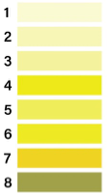
Urine color chart (for rough reference only; standardized comparison requires a transparent urine collection cup 4). Vitamin B supplements can make urine look more yellow, which does not necessarily mean you are dehydrated 25.
Mild chronic underhydration may be associated with kidney stones, constipation, and fluctuations in cognition 7. But there is no evidence that people who are already adequately hydrated can extend lifespan by forcing down more water. The goal is stable hydration, not “the more, the better.”
Comparing Five Types of Fluids
Not all fluids are equal.
Foundational fluids: plain water and sparkling water (not soda)
No caffeine, no calories, no interference. This is the foundation of hydration and should make up more than half of your total daily fluid intake.
Unsweetened, unflavored sparkling water hydrates just as well as regular water and does not damage bones or tooth enamel — that is mostly a problem with phosphoric-acid-containing colas 26,27. The main value of sparkling water is that it helps people transition away from sugar-sweetened carbonated drinks. For those who find plain water boring, it can increase willingness to drink water.
As for the debate between mineral water and purified water: for people with a normal diet, purified water does not “wash away minerals” 8. Minerals mainly come from food. The calcium and magnesium in mineral water usually contribute only modest amounts, so the difference between mineral water and purified water is not that large.
Functional fluids: coffee and tea
We have talked about coffee in detail before. Here, I want to emphasize one point: the impact of caffeine on sleep is seriously underestimated. If you enjoy the flavor of coffee, decaf coffee is almost a perfect choice — it preserves the polyphenols associated with longevity benefits while removing most of the caffeine that can interfere with sleep 9,28.
Tea is also excellent. Among people with diabetes, drinking 2–5 cups of tea per day has been associated with lower cardiovascular disease and all-cause mortality 10. But there are two caveats: tannins in strong tea can reduce absorption of non-heme iron 11, so people at higher risk of iron deficiency — such as menstruating women and vegetarians — should separate tea from meals by more than an hour 29. Also, tea contains more caffeine than decaf coffee, so it is best to reduce intake after the afternoon begins.
Liquid foods: milk, soy milk, and lattes (unsweetened)
These fluids hydrate and provide nutrients, but they also bring calories — so they need to be “accounted for.”
There is a concept called the Beverage Hydration Index (BHI), which measures how much fluid the body retains after drinking the same volume of different beverages 12. Milk has a higher BHI than plain water, likely because of its protein, fat, and electrolyte composition. These factors slow gastric emptying and reduce short-term urine output, allowing fluid to remain in the body longer. Milk can be an excellent recovery drink after exercise, because it provides hydration, protein, and electrolytes at the same time 13.
But 250 mL of whole milk contains about 150 kcal 14. A large latte may contain 300–400 mL of milk, easily reaching 180–240 kcal or more — and after drinking it, you may have basically used up your dairy and caffeine quota for the day.
Unsweetened fortified soy milk is also excellent: low in saturated fat, rich in isoflavones, and friendly to people with lactose intolerance 15,30. Both milk and soy milk are worth having daily.
The core principle is this: these are good fluids, but they cannot be treated as unlimited water. They must be included in your energy budget.
Scenario-specific fluids: electrolyte water
You do not need to drink electrolyte water every day. It is triggered by specific scenarios: long-duration exercise, heavy sweating, diarrhea or vomiting, fever, and heat exposure 31.
Coconut water is high in potassium but low in sodium, so it works as a pleasant-tasting option after light activity. But after high-intensity exercise, it is not enough for proper rehydration 16,31.
What deserves special attention is this: under normal dietary conditions, sodium, potassium, and other electrolytes are already adequately supplied by food. Drinking electrolyte water daily can add an unnecessary mineral burden and increase metabolic stress.
The negative list: sugary drinks, milk tea, fruit juice, and alcohol
Just one serving of a sugar-sweetened beverage per day (330 mL) is associated with weight gain, metabolic syndrome, and increased risk of type 2 diabetes 17. A cup of milk tea can easily contain 250–500 kcal and 25–50 grams of sugar. In essence, it is dessert. Unsweetened milk tea is closer to a latte. Fruit juice removes the fiber, raises blood glucose quickly, and provides poor satiety. It is not a substitute for whole fruit18,33.
These drinks make it very easy to consume excess sugar and create a metabolic burden.
Cola deserves its own note. Warren Buffett once used the assumption that “everyone in the world replaces all fluid intake with Coca-Cola every day” to estimate Coca-Cola’s market ceiling. It was precisely this scientifically unrealistic optimism that caused him to miss the golden window to sell in 1998 — or at least it was one of the reasons. After that, Coca-Cola’s stock price took around 16 years to return to its 1998 level. One structural reason behind this was the rise of chronic-disease medicine and the steady increase in consumer health awareness. As the world’s best-selling “sugar water,” the consumption preference that cola represents has been slowly but irreversibly changing.
In 2005, Coca-Cola launched Coke Zero. There is no doubt that it is a “healthier” choice than classic Coke. But zero sugar only removes free sugar. Ingredients such as phosphoric acid, which may have potential negative effects on the mouth and bones, are still present. Prime Life’s advice on cola remains: drink as little as possible. Of course, 2–3 cans of Coke Zero per week, followed by rinsing your mouth, likely has a negligible real-world impact on health 26,27,32.
Alcohol also deserves a separate mention. Even a single standard drink — a can of beer or a small glass of red wine — can impair REM sleep and fragment sleep in the second half of the night in some studies 19,20. “A glass of wine before bed helps sleep” is a subjective illusion. Alcohol may shorten sleep latency, but it alters sleep architecture and seriously reduces the restorative quality of sleep. Prime Life’s recommendation for alcohol is simple: the optimal intake is zero 21,33,34.
A Daily Practical Template
For a basic office-day fluid pattern, total intake falls around 2.5–3.0 liters (including yogurt):
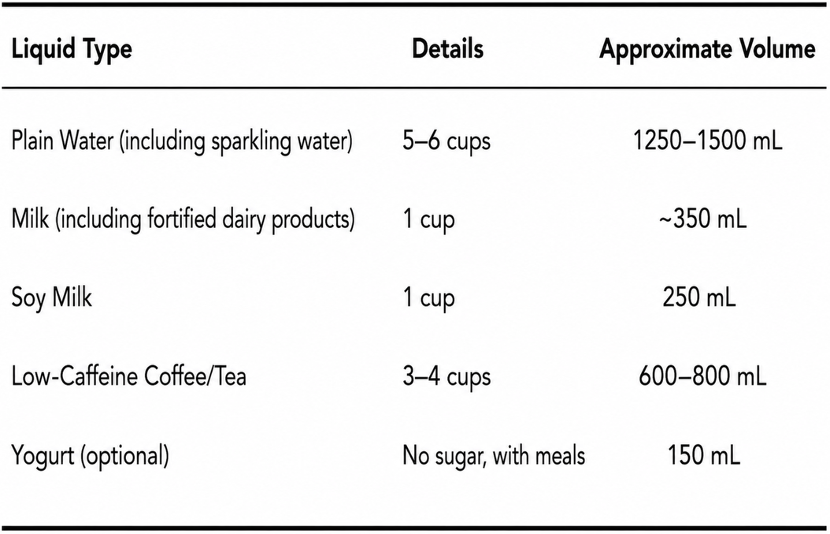
A few additional rules:
- Decaf coffee can be extended to before 6 p.m.
- Regular caffeinated coffee and strong tea should ideally stay between morning and 2 p.m. For people sensitive to sleep disruption, stopping around noon is better.
- If you are prone to waking at night to urinate, consider reducing large fluid intake 2–4 hours before bed to lower the chance of sleep interruption 22.
On training days, add another 500–1500 mL of scenario-specific fluids on top of the office-day baseline, depending on how much you sweat. A simple way to estimate: weigh yourself before and after exercise. For every 1 kg lost, drink back 1.25–1.5 liters of fluid 23. If you can eat a normal meal soon after exercise, the sodium in food will help retain water, reducing the need for a sports drink. Milk or soy milk can also be good recovery fluids — they provide both hydration and protein [13–15]30.
In other words, your day might look something like this:
A glass of plain water or a decaf Americano in the morning to wake up the body. A latte in the morning to handle alertness and your dairy quota. Decaf coffee or tea in the afternoon to get through the day. Plain water threaded throughout the day whenever there is an opening. Soy milk or yogurt at any convenient time as a nutrition add-on. After dinner, only plain water remains — and stop large-volume fluid intake two hours before bed.
Summary
A basic office-day fluid pattern, with total intake around 2.5–3.0 liters:
Plain water is the foundation and should make up more than half of the day’s total fluids. Decaf coffee and tea are upgrades — they provide polyphenols without disrupting sleep.
Lattes, milk, and soy milk are “liquid foods.” They are good things, but they must be counted in your calorie ledger and cannot be consumed endlessly as if they were water.
Electrolyte water is an emergency tool, not a daily beverage. Overuse can create an unnecessary mineral burden.
Sugar-sweetened beverages, milk tea, fruit juice, and alcohol — from the perspective of hydration — add metabolic pressure to your body rather than genuinely replenishing fluids.
Intervention recommendations are geared toward generally healthy individuals. If you have existing health conditions, always follow your doctor’s instructions.
References
[1] National Research Council. Recommended Dietary Allowances, Revised 1945. Report of the Food and Nutrition Board. Reprint and Circular Series №122. Washington (DC): National Academy of Sciences; 1945.
[2] Institute of Medicine. Dietary Reference Intakes for Water, Potassium, Sodium, Chloride, and Sulfate. Washington (DC): The National Academies Press; 2005.
[3] Nissensohn M, Fuentes Lugo D, Serra-Majem L. Comparison of beverage consumption in adult populations from three different countries: do the international reference values allow establishing the adequacy of water and beverage intakes? Nutr Hosp. 2016;33(Suppl 3):27–34.
[4] Armstrong LE, Maresh CM, Castellani JW, Bergeron MF, Kenefick RW, LaGasse KE, et al. Urinary indices of hydration status. Int J Sport Nutr. 1994 Sep;4(3):265–79.
[5] Sawka MN, Burke LM, Eichner ER, Maughan RJ, Montain SJ, Stachenfeld NS. American College of Sports Medicine position stand. Exercise and fluid replacement. Med Sci Sports Exerc. 2007 Feb;39(2):377–90.
[6] Riebl SK, Davy BM. The Hydration Equation: Update on Water Balance and Cognitive Performance. ACSMs Health Fit J. 2013 Nov;17(6):21–28.
[7] Popkin BM, D’Anci KE, Rosenberg IH. Water, hydration, and health. Nutr Rev. 2010 Aug;68(8):439–58.
[8] World Health Organization. Nutrients in Drinking Water. Geneva: World Health Organization; 2005.
[9] Poole R, Kennedy OJ, Roderick P, Fallowfield JA, Hayes PC, Parkes J. Coffee consumption and health: umbrella review of meta-analyses of multiple health outcomes. BMJ. 2017 Nov;359:j5024.
[10] Ding L, Wang HP, Zhao JY, Zhao X, Sha Y, Qin LQ, et al. Coffee and tea consumption and cardiovascular disease and all-cause and cause-specific mortality in individuals with diabetes mellitus: a meta-analysis of prospective observational studies. Front Nutr. 2025 Jun;12:1570644.
[11] Hurrell RF, Reddy M, Cook JD. Inhibition of non-haem iron absorption in man by polyphenolic-containing beverages. Br J Nutr. 1999 Apr;81(4):289–95.
[12] Maughan RJ, Watson P, Cordery PA, Walsh NP, Oliver SJ, Dolci A, et al. A randomized trial to assess the potential of different beverages to affect hydration status: development of a beverage hydration index. Am J Clin Nutr. 2016 Mar;103(3):717–23.
[13] Shirreffs SM, Watson P, Maughan RJ. Milk as an effective post-exercise rehydration drink. Br J Nutr. 2007 Jul;98(1):173–80.
[14] U.S. Department of Agriculture, Agricultural Research Service. FoodData Central: milk, whole, 3.25% milkfat, with added vitamin D [Internet]. Washington (DC): U.S. Department of Agriculture; 2019 [cited 2026 May 7].
[15] Messina M. Soy foods, isoflavones, and the health of postmenopausal women. Am J Clin Nutr. 2014 Jul;100 Suppl 1:423S-30S.
[16] Kalman DS, Feldman S, Krieger DR, Bloomer RJ. Comparison of coconut water and a carbohydrate-electrolyte sport drink on measures of hydration and physical performance in exercise-trained men. J Int Soc Sports Nutr. 2012 Jan;9(1):1.
[17] Malik VS, Popkin BM, Bray GA, Després JP, Willett WC, Hu FB. Sugar-sweetened beverages and risk of metabolic syndrome and type 2 diabetes: a meta-analysis. Diabetes Care. 2010 Nov;33(11):2477–83.
[18] Muraki I, Imamura F, Manson JE, Hu FB, Willett WC, van Dam RM, et al. Fruit consumption and risk of type 2 diabetes: results from three prospective longitudinal cohort studies. BMJ. 2013 Aug;347:f5001.
[19] Ebrahim IO, Shapiro CM, Williams AJ, Fenwick PB. Alcohol and sleep I: effects on normal sleep. Alcohol Clin Exp Res. 2013 Apr;37(4):539–49.
[20] Gardiner C, Weakley J, Burke LM, Roach GD, Sargent C, Maniar N, et al. The effect of alcohol on subsequent sleep in healthy adults: a systematic review and meta-analysis. Sleep Med Rev. 2025 Apr;80:102030.
[21] GBD 2020 Alcohol Collaborators. Population-level risks of alcohol consumption by amount, geography, age, sex, and year: a systematic analysis for the Global Burden of Disease Study 2020. Lancet. 2022 Jul;400(10347):185–235.
[22] Cornu JN, Abrams P, Chapple CR, Dmochowski RR, Lemack GE, Michel MC, et al. A contemporary assessment of nocturia: definition, epidemiology, pathophysiology, and management — a systematic review and meta-analysis. Eur Urol. 2012 Nov;62(5):877–90.
[23] Maughan RJ, Leiper JB, Shirreffs SM. Restoration of fluid balance after exercise-induced dehydration: effects of food and fluid intake. Eur J Appl Physiol Occup Physiol. 1996;73(3–4):317–25.
[24] EFSA Panel on Dietetic Products, Nutrition, and Allergies. Scientific Opinion on Dietary Reference Values for water. EFSA Journal. 2010 Mar;8(3):1459.
[25] Drake C, Roehrs T, Shambroom J, Roth T. Caffeine effects on sleep taken 0, 3, or 6 hours before going to bed. J Clin Sleep Med. 2013 Nov;9(11):1195–1200.
[26] Reddy A, Norris DF, Momeni SS, Waldo B, Ruby JD. The pH of beverages in the United States. J Am Dent Assoc. 2016 Apr;147(4):255–63.
[27] Tucker KL, Morita K, Qiao N, Hannan MT, Cupples LA, Kiel DP. Colas, but not other carbonated beverages, are associated with low bone mineral density in older women: the Framingham Osteoporosis Study. Am J Clin Nutr. 2006 Oct;84(4):936–42.
[28] Fuzi SFA, Koller D, Bruggraber S, Pereira DIA, Dainty JR, Mushtaq S. A 1-h time interval between a meal containing iron and consumption of tea attenuates the inhibitory effects on iron absorption: a controlled trial in a cohort of healthy UK women using a stable iron isotope. Am J Clin Nutr. 2017 Dec;106(6):1413–21.
[29] McDermott BP, Anderson SA, Armstrong LE, Casa DJ, Cheuvront SN, Cooper L, et al. National Athletic Trainers’ Association position statement: fluid replacement for the physically active. J Athl Train. 2017 Sep;52(9):877–95.
[30] Messina M. Soy and Health Update: evaluation of the clinical and epidemiologic literature. Nutrients. 2016 Dec;8(12):754.
[31] World Health Organization. Use of non-sugar sweeteners: WHO guideline. Geneva: World Health Organization; 2023.
[32] Canadian Centre on Substance Use and Addiction. Canada’s Guidance on Alcohol and Health. Ottawa: Canadian Centre on Substance Use and Addiction; 2023.
[33] Thomas DT, Erdman KA, Burke LM. Position of the Academy of Nutrition and Dietetics, Dietitians of Canada, and the American College of Sports Medicine: Nutrition and Athletic Performance. Med Sci Sports Exerc. 2016 Mar;48(3):543–68.
[34] Muraki I, Imamura F, Manson JE, Hu FB, Willett WC, van Dam RM, Sun Q. Fruit consumption and risk of type 2 diabetes: results from three prospective longitudinal cohort studies. BMJ. 2013 Aug 28;347:f5001.
*[35]Stare FJ, McWilliams M. Nutrition for Good Health. Fullerton (CA): Plycon Press; 1974.*92. “Eight Glasses of Water a Day”? A Serious Guide to Fluid Intake
[25] Drake C, Roehrs T, Shambroom J, Roth T. Caffeine effects on sleep taken 0, 3, or 6 hours before going to bed. J Clin Sleep Med. 2013 Nov;9(11):1195–1200.
[26] Reddy A, Norris DF, Momeni SS, Waldo B, Ruby JD. The pH of beverages in the United States. J Am Dent Assoc. 2016 Apr;147(4):255–63.
[27] Tucker KL, Morita K, Qiao N, Hannan MT, Cupples LA, Kiel DP. Colas, but not other carbonated beverages, are associated with low bone mineral density in older women: the Framingham Osteoporosis Study. Am J Clin Nutr. 2006 Oct;84(4):936–42.
[28] Fuzi SFA, Koller D, Bruggraber S, Pereira DIA, Dainty JR, Mushtaq S. A 1-h time interval between a meal containing iron and consumption of tea attenuates the inhibitory effects on iron absorption: a controlled trial in a cohort of healthy UK women using a stable iron isotope. Am J Clin Nutr. 2017 Dec;106(6):1413–21.
[29] McDermott BP, Anderson SA, Armstrong LE, Casa DJ, Cheuvront SN, Cooper L, et al. National Athletic Trainers’ Association position statement: fluid replacement for the physically active. J Athl Train. 2017 Sep;52(9):877–95.
[30] Messina M. Soy and Health Update: evaluation of the clinical and epidemiologic literature. Nutrients. 2016 Dec;8(12):754.
[31] World Health Organization. Use of non-sugar sweeteners: WHO guideline. Geneva: World Health Organization; 2023.
[32] Canadian Centre on Substance Use and Addiction. Canada’s Guidance on Alcohol and Health. Ottawa: Canadian Centre on Substance Use and Addiction; 2023.
[33] Thomas DT, Erdman KA, Burke LM. Position of the Academy of Nutrition and Dietetics, Dietitians of Canada, and the American College of Sports Medicine: Nutrition and Athletic Performance. Med Sci Sports Exerc. 2016 Mar;48(3):543–68.
[34] Muraki I, Imamura F, Manson JE, Hu FB, Willett WC, van Dam RM, Sun Q. Fruit consumption and risk of type 2 diabetes: results from three prospective longitudinal cohort studies. BMJ. 2013 Aug 28;347:f5001.
[35]Stare FJ, McWilliams M. Nutrition for Good Health. Fullerton (CA): Plycon Press; 1974.