Today we continue the discussion of how light affects the body through the skin pathway. In the last two pieces, we talked about ultraviolet light at one end of the spectrum. Today, we move to the other end: red light and near-infrared.
There is a kind of light that can shine on the skin without causing sunburn or photoaging, and may even make cells “feel young again.” Your first reaction might be: Which beauty-device brand is making this up now?
But this time, it is not just marketing. Red light and near-infrared phototherapy — photobiomodulation (PBM) — has already moved from the lab into the FDA-cleared device list in certain indications, from the recovery rooms of elite athletes into Bryan Johnson’s daily protocol 20.
A large body of research suggests that mitochondria can absorb specific wavelengths of light, much like plant chloroplasts absorb sunlight — except we are not making sugar; we are optimizing the ATP production line 5,6.
In this article, I want to take this technology — which has been both overmarketed and over-doubted — and break it down clearly:
What is it actually doing? Which effects are backed by hard evidence? And does it deserve a place in the Prime Life toolbox?
Red Light / Near-Infrared vs. Ultraviolet Light
Let’s quickly revisit ultraviolet light. What UVB and UVA have in common is high energy: UVB can directly break DNA strands, while UVA generates free radicals that attack collagen. Their mode of action is essentially damage + stress response.
Red light (620–700 nm) and near-infrared (700–1100 nm) are entirely different. At normal doses, they generally do not cause molecular damage. Instead, they can be absorbed by a key mitochondrial protein — cytochrome c oxidase (COX). It is like giving a sluggish engine a dose of premium fuel and bringing it back toward optimal operating conditions.
Their penetration depth is also different. Red light mostly stays near the surface of the skin (2–5 mm), which makes it suitable for skin-related applications. Near-infrared penetrates deeper (up to nearly 3 cm) 7, and can affect muscles, joints, and may even pass through the skull to reach the cerebral cortex 8.
David Sinclair classifies it as a metabolic health intervention tool, while Bryan Johnson treats it as part of a daily recovery protocol. That positioning is basically accurate.
Why Might It Work? Four Core Mechanisms
1. Charging the mitochondria: making the cell’s power plants more efficient
We have already talked in depth about the importance of mitochondria. When red light and near-infrared are absorbed by COX, the efficiency of the electron transport chain improves, ATP production — the cell’s energy currency — increases, and mitochondria become more active 9.
Put another way: your cells need to make tens of kilograms of ATP a day to keep you alive and functioning. PBM is a bit like servicing the production line — especially in aging cells 10, whose mitochondria are already underperforming and therefore have more room to improve.
The result is better energy metabolism and stronger cellular repair capacity. Wounds heal faster, skin looks better, muscles recover faster — all of it rests on the same foundation: cells have more usable energy. That is why PBM is often viewed as a non-invasive mitochondrial enhancement tool.
2. Mild stress training: strengthening the cell’s own antioxidant system
Here is the counterintuitive part. PBM briefly increases reactive oxygen species (ROS) 11,12 — yes, the same ROS that countless antioxidant supplements treat as the enemy.
But dose changes everything.
At low levels, ROS are not poison; they are signal molecules. They trigger adaptive cellular responses, activating antioxidant systems such as SOD and Nrf2, and strengthening the cell’s own defenses.
It is like lifting weights in the gym. Muscle fibers are torn microscopically → the body initiates repair → the muscle comes back stronger. The mild ROS stress induced by PBM is, in essence, training the cell’s antioxidant capacity — teaching it to fish, rather than simply handing it a pill.
Exercise, cold exposure, intermittent fasting, and polyphenols all work through a similar mild stress → adaptation logic. PBM simply translates that logic into the language of photons.
But there is a trap here: the dosing window is narrow 3. That is exactly why PBM is not a case of “the more the better” — I’ll come back to that shortly.
3. Anti-inflammatory regulation: shifting from inflammatory mode to repair mode
Animal studies suggest that PBM can reduce inflammatory factors such as TNF-α and IL-6, while promoting macrophages to shift from M1 (pro-inflammatory) to M2 (repair-oriented) states. More importantly, it appears to inhibit the NF-κB signaling pathway, one of the core switches behind chronic inflammation 11.
Why does this matter for long-term health? Because chronic inflammation — inflammaging — is one of the hallmarks of aging. It does not hit like acute inflammation. It leaks quietly, like a long-term drip in the walls, slowly wearing down the whole system. PBM offers a non-drug way to modulate this — rather than bluntly suppressing the immune system, it may help the body return to a more balanced state.
4. Improving blood flow: delivering oxygen and nutrients faster
As PBM improves ATP production efficiency, nitric oxide (NO) — which had been occupying the active site of COX — is released 27.
NO helps dilate blood vessels, improving local blood flow 13. That means oxygen, glucose, amino acids, and other raw materials can reach the tissues that need repair more quickly, while metabolic waste can also be cleared more efficiently.
This likely helps muscle recovery, and may also have value for cognitive function, since the brain is such a heavy oxygen consumer. That said, this effect is mainly local — do not expect a single red-light session to suddenly transform circulation throughout your entire body.
Which Health Benefits Have the Hardest Evidence? Ranked by Confidence
Skin anti-aging: the strongest evidence, and even the FDA has acknowledged it
If you remember only one use case for PBM, let it be this: it can promote the production of type I and III collagen, reduce wrinkle depth, improve skin elasticity, and accelerate wound healing 14.
The clinical trial data are fairly direct: with red light in the 630–660 nm range, used 2–5 times per week over 4–12 weeks, wrinkle depth has been reduced by about 30% 1,15. The FDA has already cleared several red-light devices for cosmetic indications such as wrinkle improvement — one of the few phototherapy applications to receive regulatory acceptance 20.
Red light acts directly on fibroblasts in the dermis, the cells responsible for producing collagen. Once you “recharge” them, production efficiency improves naturally. This is not mysticism. It is straightforward cell biology applied in practice.
Exercise recovery: what elite athletes use is not a placebo
PBM can reduce post-exercise markers of muscle damage such as creatine kinase (CK) 16,17, improve muscle endurance, and alleviate delayed onset muscle soreness (DOMS).
Some meta-analyses suggest that under specific conditions, PBM may slightly improve certain muscle performance metrics — such as endurance and recovery speed 2. That may not sound dramatic, but in elite sports, that kind of margin can separate a gold medal from second place.
What is even more interesting is the timing: studies suggest pre-exercise PBM works better than using it after exercise. It appears to “pre-warm” the mitochondria, making muscles more resistant to fatigue during high-intensity output. It is a bit like warming up the engine before a race 16. And judging from the literature, local PBM seems to have clearer benefits than whole-body PBM.
If you train hard regularly, or if your recovery speed is not what it used to be, PBM is a low-risk tool worth considering.
Chronic pain: already recognized in some physical therapy guidelines
Arthritis, neck pain, fasciitis, tendinopathy — PBM appears to have relatively clear effects in these chronic pain scenarios 18. Pain scores improve, and functional movement improves as well. Some physical therapy guidelines already include it as a recommended option.
The mechanisms are easy to understand: reducing inflammatory factors, improving local blood flow, and promoting tissue repair. It is not a painkiller, so it will not make pain vanish instantly. But it may improve tissue quality at the source, allowing pain to gradually ease.
Brain and cognition: a frontier hotspot, but the evidence is not hard enough yet
Near-infrared light — especially around 810 nm — can penetrate the skull, and in theory may influence brain tissue 8. Some small studies suggest it may improve cognition, memory, and levels of brain-derived neurotrophic factor (BDNF) 24,25.
But the problem is this: after passing through the skull, the energy density reaching the cortex may be only 1–3% of what was delivered at the surface. How much effective stimulation deeper brain regions — such as the hippocampus — actually receive remains unclear. Most studies are small, and long-term follow-up is lacking.
So if you treat it as a possibly useful cognitive optimization tool and try it with modest expectations, that is reasonable. But if you expect it to reverse Alzheimer’s disease or significantly raise IQ, you are asking too much of the current evidence.
Sleep improvement: the mechanism is still not fully clear, but it is certainly better than white or blue light
Red light suppresses melatonin far less than blue light does — that is one of its clear advantages. Some studies suggest that nighttime use of red light may improve sleep quality, though the mechanism is still not entirely clear and may involve relaxation effects or neural regulation.
If you need lighting at night, red light is less disruptive to circadian rhythm than white or blue light. But it is not some magical sleep-promoting device. If you truly want to improve sleep, the basics still matter more: light management, temperature, stress regulation, and other fundamentals.
Where Do We Get Red Light?
Of course sunlight also contains red light and near-infrared. But within a UV-safe exposure range, it is hard to obtain a large enough therapeutic red-light dose from sunlight alone to generate meaningful health benefits.
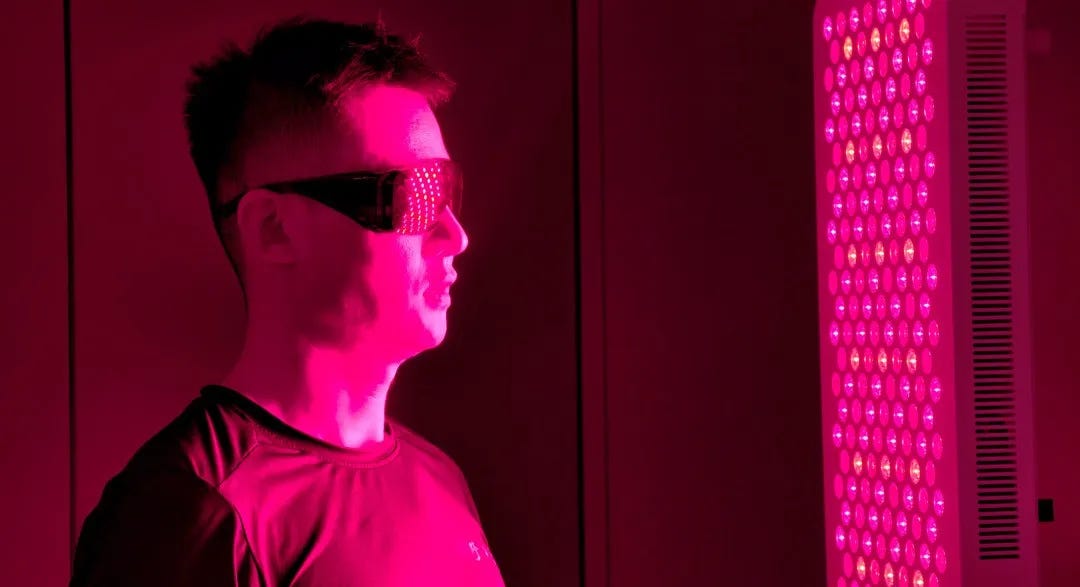
So LED-based devices have become the practical option: red-light masks, near-infrared lamps, joint-treatment devices, red-light therapy panels, and so on.
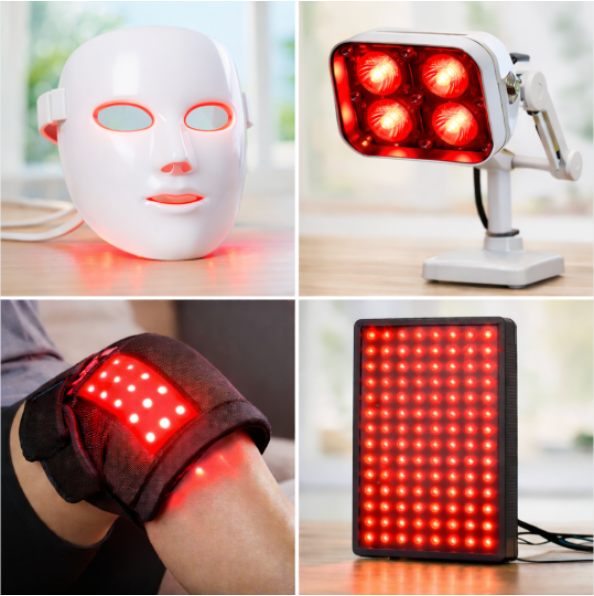
Painted by AI
A Wide Safety Margin
Red-light therapy has an unusually wide safety margin. Unlike ultraviolet radiation, red light at normal therapeutic doses does not typically damage DNA directly or cause photoaging 4.
Human LED skin dose-escalation studies (STARS 1/2) suggest that the thermal damage threshold for red light is around 320 J/cm² or higher 19. Take one red-light device used at Prime Lab as an example: at a distance of 30 cm, its irradiance is 178 mW/cm². You would need to expose yourself continuously for more than 30 minutes to reach that threshold. At 60 cm, with irradiance at 131 mW/cm², you would need more than 40 minutes. In other words, as long as you follow the manufacturer’s instructions and control distance and duration properly, safe use is very achievable 26.
The boundary for thermal discomfort is also fairly forgiving. Skin temperature generally has to rise above 41°C before discomfort becomes likely. Under normal use, at a distance of 30 cm, you might only start to feel some warmth after more than 10 minutes of continuous exposure.
But the eyes are where caution matters most. Do not shine it directly into your eyes. It is best to wear protective goggles.
And of course, some groups should avoid it:
- Patients with active tumors. In vitro research on PBM and cancer cells remains inconclusive. Some studies suggest possible proliferative effects, though the in vivo situation may be very different. Out of caution, people with active cancer should avoid self-administered use; the mechanisms are complicated, and the conservative move is to avoid it 22.
- Pregnant women, especially for exposure over the abdomen.
- People with hyperthyroidism. If the neck area is involved, consult a doctor first 23.
- People taking photosensitizing medications, since some antibiotics and diuretics increase light sensitivity.
In short, if you follow the manufacturer’s recommended time and distance, it is actually quite hard to get yourself into trouble.
PBM Is a Low-Risk Tool for Long-Term Health Optimization
Red-light therapy is not some destiny-rewriting anti-aging miracle. Its effects are not dramatic or immediate — if anything, that may be its biggest weakness: the subjective improvement is often subtle, which makes long-term consistency harder.
But it is a grounded, low-risk, compounding tool for long-term optimization.
So if you were building a Prime Life toolbox from scratch, where should PBM sit in the order of priority? My suggestion is this:
- First complete your baseline testing, treat actual disease, and make sure any chronic illness has a clear treatment plan.
- Lock down the lifestyle fundamentals: sleep, diet, exercise, emotional health.
- Then consider high-leverage interventions: strength training, Zone 2 cardio, VO2 max training, alongside smart supplement optimization.
- Only after that come the lower-risk optimization tools: red light, cold exposure, sauna, hyperbaric oxygen, and so on.
- And only at the very end should you move to frontier interventions where the evidence is still insufficient: peptides, stem cell therapies, and the like.
Red light belongs in Tier 4. It is not essential. But if you have already built the first two layers well, it is absolutely a tool worth adding.
As for how to use red light, we’ll keep going in the next piece.
Intervention recommendations are geared toward generally healthy individuals. If you have existing health conditions, always follow your doctor’s instructions.
References
[1]Bragato EF, Paisano AF, Pavani C, et al. Role of photobiomodulation application frequency in facial rejuvenation: randomized, sham-controlled, double-blind, clinical trial. Lasers Med Sci. 2025 Apr;40:170.
[2]Ferraresi C, Huang YY, Hamblin MR. Photobiomodulation in human muscle tissue: an advantage in sports performance? J Biophotonics. 2016 Dec;9(11–12):1273–1299.
[3]Huang Y, Chen AC, Carroll J, Hamblin MR. Biphasic Dose Response in Low Level Light Therapy. Dose-Response. 2009.
[4]Barolet D, Christiaens F, Hamblin MR. Infrared and skin: Friend or foe. J Photochem Photobiol B. 2016.
[5]Karu T. Mitochondrial Signaling in Mammalian Cells Activated by Red and Near‐IR Radiation. Photochemistry and Photobiology. 2008.
[6]Karu T. Primary and secondary mechanisms of action of visible to near-IR radiation on cells. J Photochem Photobiol B. 1999 Mar;49(1):1–17.
[7]Ash C, Dubec M, Donne K, Bashford T. Effect of wavelength and beam width on penetration in light-tissue interaction using computational methods. Lasers Med Sci. 2017 Nov;32(8):1909–1918.
[8]Tedford CE, DeLapp S, Jacques S, Anders J. Quantitative analysis of transcranial and intraparenchymal light penetration in human cadaver brain tissue. Lasers Surg Med. 2015 Apr;47(4):312–322.
[9]de Freitas LF, Hamblin MR. Proposed mechanisms of photobiomodulation or low-level light therapy. IEEE J Sel Top Quantum Electron 22(3):7000417. 2016 Dec;165:1–17.
[10]Passarella S, Karu T. Absorption of monochromatic and narrow band radiation in the visible and near IR by both mitochondrial and non-mitochondrial photoacceptors results in photobiomodulation. J Photochem Photobiol B. 2014.
[11]Hamblin MR. Mechanisms and applications of the anti-inflammatory effects of photobiomodulation. AIMS Biophysics. 2017.
[12]Chen AC, Arany PR, Huang YY, et al. Low-level laser therapy activates NF-kB via generation of reactive oxygen species in mouse embryonic fibroblasts. PLoS One. 2011;6(22):e22453.
[13]Gavish L, Hoffer O, Rabin N, et al. Microcirculatory Response to Photobiomodulation — Why Some Respond and Others Do Not: A Randomized Controlled Study. Lasers Surg Med. 2020;52(9):863–872.
[14]Avci P, Gupta A, Sadasivam M, Vecchio D, Pam Z, Pam N, Hamblin MR. Low-level laser (light) therapy (LLLT) in skin: stimulating, healing, restoring. Semin Cutan Med Surg. 2013.
[15]Mota LR, Duarte IDS, Galache TR, et al. Photobiomodulation Reduces Periocular Wrinkle Volume by 30%: A Randomized Controlled Trial. Photobiomodul Photomed Laser Surg. 2023 Feb;41(2):48–56.
[16]Li BM, et al. Can pre-exercise photobiomodulation improve muscle endurance and promote recovery from muscle strength and injuries in people with different activity levels? A meta-analysis of randomized controlled trials. Lasers Med Sci. 2024.
[17]Tomazoni SS, Machado CDSM, De Marchi T, Casalechi HL, Bjordal JM, de Carvalho PTC, Leal-Junior ECP. Infrared Low-Level Laser Therapy (Photobiomodulation Therapy) before Intense Progressive Running Test of High-Level Soccer Players: Effects on Functional, Muscle Damage, Inflammatory, and Oxidative Stress Markers-A Randomized Controlled Trial. Oxid Med Cell Longev. 2019.
[18]Chow RT, Johnson MI, Lopes-Martins RA, Bjordal JM. Efficacy of low-level laser therapy in the management of neck pain: a systematic review and meta-analysis of randomised placebo or active-treatment controlled trials. Lancet. 2009.
[19] Food and Drug Administration. Photobiomodulation (PBM) Devices — Premarket Notification [510(k)] Submissions: Draft Guidance for Industry and Food and Drug Administration Staff. Issued Jan 12, 2023.
[20] FDA 510(k) device summaries(K191629 faceLITE、K101190 LightStim)
[21] Álvarez-Martínez M, Borden G. A systematic review on whole-body photobiomodulation for exercise performance and recovery. Lasers Med Sci. 2025;40:55.
[22] de Pauli Paglioni M, et al. Tumor safety and side effects of photobiomodulation therapy used for prevention and management of cancer treatment toxicities. A systematic review. Oral Oncol. 2019;93:21–28.
[23] Höfling DB, et al. Low-level laser in the treatment of patients with hypothyroidism induced by chronic autoimmune thyroiditis: a randomized, placebo-controlled clinical trial. Lasers Med Sci. 2013;28(3):743–753.
[24] Iosifescu DV, et al. Very Low-Level Transcranial Photobiomodulation for Major Depressive Disorder: The ELATED-3 Multicenter, Randomized, Sham-Controlled Trial. J Clin Psychiatry. 2022;83(5):21m14226.
[25] de Oliveira BH, et al. Transcranial photobiomodulation increases cognition and serum BDNF levels in adults over 50 years: a randomized, double-blind, placebo-controlled trial. J Photochem Photobiol B. 2024;260:113041.
[26]Jagdeo J, Nguyen JK, Struck SK, et al. Safety of light emitting diode-red light on human skin: Two randomized controlled trials. J Biophotonics. 2020 Feb;13(2):e201960106.
[27]Kashiwagi S, Morita A, Yokomizo S, et al. Photobiomodulation and nitric oxide signaling. Nitric Oxide. 2023 Jan;130:58–68.