64. Room Temperature, Blankets, Mattresses, and Gender Differences: The Art of Thermal Exchange During Sleep
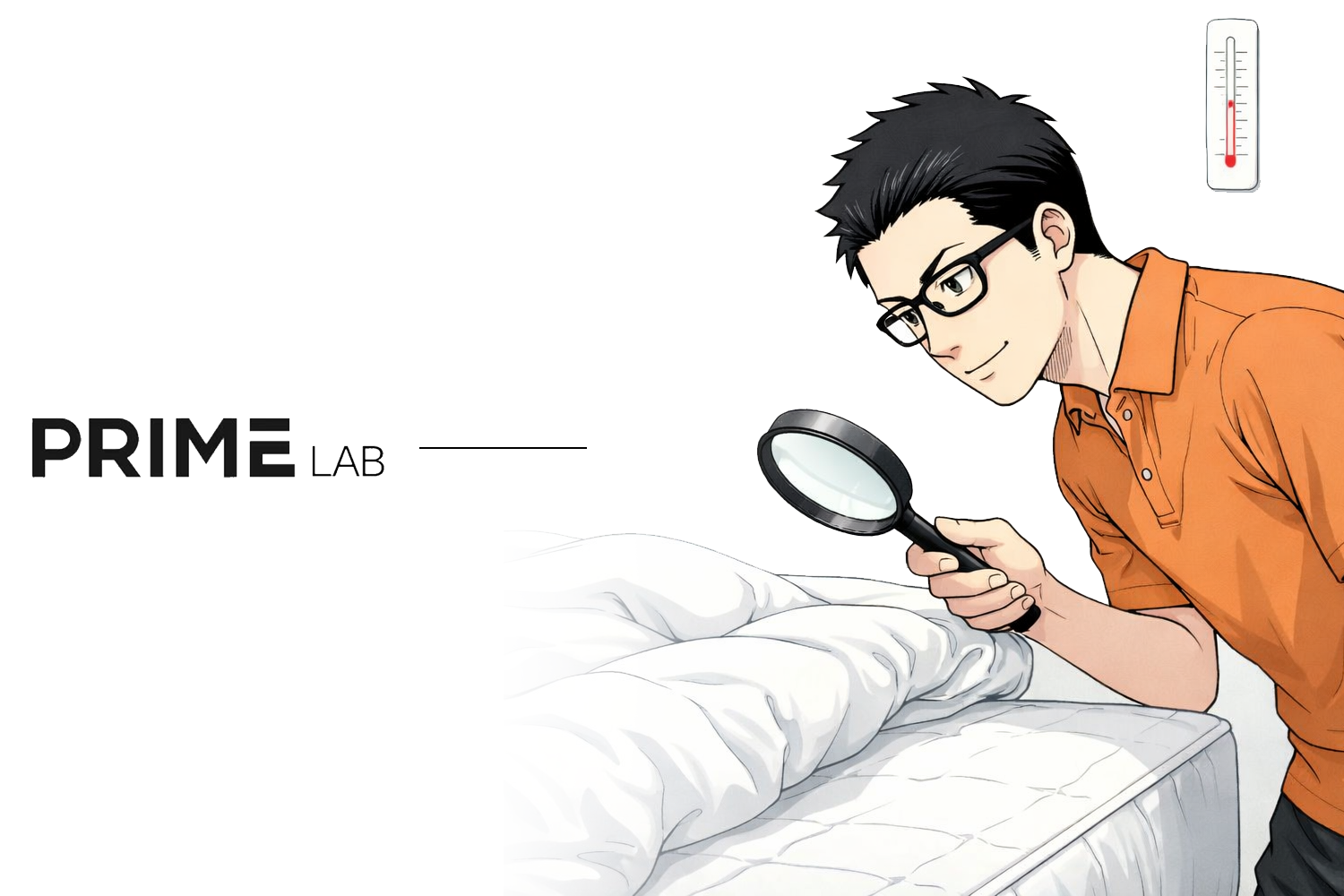
Painted by AI
When I sleep, I like to set the air conditioning to 24°C. That temperature feels just right for me. I sleep under a relatively thin but highly breathable silk comforter, with my hands and feet tucked in. I also prefer a firm mattress and a slightly stiff, low-profile memory foam pillow — just enough support to let my head and neck gently sink into its groove. After lots of trial and error, this is the combination I’ve found most comfortable.
But every time I travel, that balance breaks.
Hotel quilts are usually thicker. While they do feel warm and cozy, I often end up waking up drenched in heat. If I lower the AC too much, the bed turns into a battlefield of extremes: the inside sweltering, the outside freezing. Keep limbs in — I overheat. Stick them out — I shiver.
I’ve tried all sorts of midnight workarounds. Wearing a bathrobe under a towel. Pulling the insert out of the duvet cover and just sleeping under that. None of them really work.
Sleep is intensely personal. I’m sure hotels have done research and landed on what works for most guests. So maybe I’m just an outlier. But what I’ve learned is this: there is no universal optimal setup. The best configuration is the one that allows your core body temperature to stay low and feels right to your own senses.
In the last piece, I explored how to prep for sleep by adjusting body temperature beforehand. Today, let’s talk about thermal regulation during sleep. Because falling asleep is only the first step — if your temperature regulation fails, you’ll still wake up in the middle of the night, either hot or cold.
And this matters especially for REM sleep. REM dominates the second half of the night, and during this phase, your body enters a state of muscle atonia — your muscles are paralyzed, making it harder to roll over or kick off a blanket. That inability to self-adjust increases the risk of waking up due to thermal discomfort 1,2.
The goal isn’t a perfect number — it’s consistent thermal exchange
We’re not looking for a “perfect” temperature. What matters is whether your body can offload heat effectively and consistently throughout the night, keeping core temperature low without triggering cold-induced wakefulness 1,3.
This thermal balance depends on at least three factors:
- Room temperature
- Your blanket or comforter
- Your mattress
Besides, gender-related differences in temperature sensitivity also play a role.
Room Temperature
Why do so many sleep studies recommend 16–20°C as the ideal room temperature? The reason is simple: at these temperatures, there’s sufficient thermal gradient between the skin and ambient air to enable effective heat dissipation [4-6].
But these studies are mostly based on Western populations with different habits. If your peripheral blood vessels are more reactive — meaning they constrict more easily in response to cold — your body might not register “pleasantly cool.” Instead, it may switch into defense mode, activating the sympathetic nervous system, constricting blood vessels, and trapping heat inside, making it harder to fall asleep 7,8.
This phenomenon — increased peripheral vasoconstrictor responsiveness — is common among people who often feel cold in their extremities, sweat under stress, or have high sympathetic tone. It can also be triggered by external inputs like stress, anxiety, hunger, caffeine, or nicotine 7,8.
That’s why 18°C doesn’t work well for me. 24°C still allows for effective heat loss while avoiding stress activation.
Think of room temperature as the baseline condition — it defines the potential for heat loss. But whether that potential gets realized depends on the microenvironment created by your bedding and mattress.
Blankets
A recent study made headlines for showing that heavier blankets can lead to better sleep. The added weight and secure wrapping create a sense of safety and calm, helping lower sympathetic tension 9.
In this study, 26 healthy young adults were tested under two conditions: weighted blankets (~12.2% of body weight, using glass beads and polyester filling) versus light blankets (~2.4% of body weight). Saliva and subjective sleepiness ratings were collected every 20 minutes in the hour before lights out. Results showed that melatonin levels rose 32% more under the weighted blanket. Subjective sleepiness and total sleep time didn’t differ significantly.
This melatonin boost was attributed to deep pressure stimulation (DPS). But it’s worth noting that this was a short-term study in healthy individuals. Whether the findings hold for people with insomnia or other sleep issues remains to be seen. And more importantly: if the blanket traps too much heat, the potential benefits might be nullified 1,3,9.
So yes, both heavy blanket + cooler room and light blanket + warmer room can work.
But the key is: if your blanket causes overheating or humidity, the benefits vanish. Once your bed becomes stuffy and wet, it doesn’t matter how calming the weight feels — you’ll wake up miserable.
If you do like heavier blankets, choose breathable, heat-dissipating materials.
Our bodies cool down during sleep by sweating and evaporation. If your bedding traps humidity, it blocks sweat evaporation, cutting off the body’s natural path to reduce core temperature.
Even in a cool room, a poorly ventilated sleep microclimate can cause overheating. That’s exactly why I wake up sweaty in hotel rooms.
Bottom line: no matter the thickness, make sure your blanket breathes.
Mattresses
If you’re constantly trapped between being too hot under the blanket and too cold without it, it might be time to consider a temperature-regulating mattress.
Your mattress is the surface with which your body has the most contact during sleep. If your bedding doesn’t breathe well, but your mattress stays cool — like a summer bamboo mat — it can serve as your main heat sink.
If you’re particularly troubled by thermal issues, they’re worth exploring.
Side Note 1: Foot Temperature During Sleep
Our feet are primary heat-exchange zones. Soaking them before bed helps dilate blood vessels, warming the skin and enabling better heat release into the cooler room air.
But during sleep, if your feet stay wrapped in unbreathable bedding with little temperature difference from the surrounding environment, heat can’t dissipate effectively. You wake up sweating 10,11.
Kids understand this intuitively. They often kick off their blankets or sprawl in starfish positions — it’s their way of cooling down mid-sleep. It’s thermoregulation in action.
So it’s crucial to keep your feet cool, dry, and breathable during sleep. Choose breathable bedding, and if you’re not particularly cold-sensitive, there’s no need to keep your feet fully covered. Loose socks and an occasional foot outside the blanket can actually feel great.
Warm your feet to fall asleep. Cool your feet to stay asleep.
Side Note 2: Are Women Really More Sensitive to Cold?
Yes — this isn’t a myth.
Have you ever argued with your partner about the AC setting? It’s common in many households: women want it warmer; men want it cooler.
Research aligns with real-life experience: across different studies and settings, women tend to prefer room temperatures that are 0.7–3°C higher than men. That explains why women often feel “roasted” after a shower if the room isn’t warmed, or why a temperature that feels fine to men may seem too cold to women 12,13.
Office building studies — where indoor temperature, humidity, and air flow were measured, and occupants were surveyed about their comfort — found that women prefer ambient temperatures 0.7–0.8°C higher than men 12,14.
Controlled thermal exposure experiments — where participants performed cognitive-motor tasks under varying heat conditions — estimated women’s preferred temperature to be around 3°C higher than men’s 13.
One study had real-world scale; the other had strict lab controls. Both revealed the same pattern: women prefer it warmer.
This isn’t just subjective — it ties into differences in basal metabolic rate, peripheral circulation, and hormonal cycles.
So if you and your partner argue about AC, remember: both of you are probably right.
The fix? Compromise on room temp. One person uses a thicker blanket, the other thinner. Or get fancy: use a dual-zone mattress where each side can be independently temperature-controlled.
To Summarize
If you’re cold-sensitive with high peripheral vasoconstriction, a cooler room with a thicker but breathable blanket — plus targeted warming for hands and feet — can keep you more comfortable while supporting a drop in core body temperature.
If you’re heat-sensitive and prone to waking up hot at night, aim for a slightly warmer room, a light and breathable blanket, and a mattress that doesn’t retain heat.
There’s no superior setup — just the one that fits you.
Let your feet breathe. Don’t smother them.
And yes, men and women feel temperatures differently. Work it out together.
Intervention recommendations are geared toward generally healthy individuals. If you have existing health conditions, always follow your doctor’s instructions.
References
[1]Okamoto-Mizuno K, Mizuno K. Effects of thermal environment on sleep and circadian rhythm. J Physiol Anthropol. 2012 May 31;31(1):14.
[2]Parmeggiani PL. Thermoregulation and sleep. Front Biosci. 2003 May 1;8:s557–67.
[3]Troynikov O, Watson CG, Nawaz N. Sleep environments and sleep physiology: A review. J Therm Biol. 2018 Dec;78:192–203.
[4]Harding EC, Franks NP, Wisden W. The temperature dependence of sleep. Front Neurosci. 2019 Apr 24;13:336.;
[5]National Sleep Foundation. Sleep tips. National Sleep Foundation. n.d.
[6]Sleep Foundation. The best temperature for sleep. Sleep Foundation. 2025 Jul 11.
[7]Pache M, Krauchi K, Cajochen C, Wirz-Justice A, Dubler B, Flammer J. Cold feet and prolonged sleep-onset latency in vasospastic syndrome. Lancet. 2001 May 12;357(9269):1697–1698.
[8]Harding EC, Franks NP, Wisden W. Sleep and thermoregulation. Curr Opin Physiol. 2020 Jun;15:7–13.
[9]Meth EMS, Brandão LEM, van Egmond LT, Xue P, Grip A, Wu J, Adan A, Andersson F, Pacheco AP, Uvnäs-Moberg K, Cedernaes J, Benedict C. A weighted blanket increases pre-sleep salivary concentrations of melatonin in young, healthy adults. J Sleep Res. 2023 Apr;32(2):e13743.
[10]Krauchi K, Cajochen C, Werth E, Wirz-Justice A. Warm feet promote the rapid onset of sleep. Nature. 1999 Sep 2;401(6748):36–37.
[11]Liao WC, Chiu MJ, Landis CA. A warm footbath before bedtime and sleep in older Taiwanese with sleep disturbance. Res Nurs Health. 2008 Oct;31(5):514–528.
[12]Maykot JK, de Oliveira CC, Ghisi E, Rupp RF. Influence of Gender on Thermal, Air-Movement, Humidity and Air-Quality Perception in Mixed-Mode and Fully Air-Conditioned Offices. Sustainability. 2022 Aug;14(15):9722.
[13]Beshir MY, Ramsey JD. Comparison between male and female subjective estimates of thermal effects and sensations. Appl Ergon. 1981 Mar;12(1):29–33.
[14]Maykot JK, Rupp RF, Ghisi E. A field study about gender and thermal comfort temperatures in office buildings. Energy Build. 2018 Nov;178:254–264.