To build a more intuitive feel for PM2.5 levels across common indoor situations, Prime Lab conducted a series of real-world PM2.5 measurements in several major indoor scenarios for reference.
Using the same HEPA air purifier (coverage area: 120 m²; particulate CADR: 1000 m³/h), PrimeLab ran comparative tests across five common scenarios:
- Baseline group:PrimeLab’s enclosed indoor environment after normal ventilation and then closing the windows.
- Experimental groups:PrimeLab’s enclosed indoor environment after different scenarios were allowed to proceed with the windows closed for5–20 minutes.
- The testing site was a room of about10 square metersinside PrimeLab withgood ventilation conditions. After each experiment, the room was ventilated for10 minutes, thenthe windows were closed and the HEPA purifier was turned on to ensure that air quality returned to baseline before the next trial.
- In every scenario, changes in air-quality readings were recorded, and photo evidence was retained.
- In 2021, the WHO updated its24-hour average PM2.5 guidelineto15 μg/m³— andlower is better. Under China’s AQI system, the“Good”category corresponds to a 24-hour average PM2.5 level of≤35 μg/m³. The results below are analyzed against both standards.
As I explained in the previous two articles, HEPA filters are highly sensitive to and effective at filtering particulate matter such as PM2.5. But an air purifier is ultimately a remedy, not a “get-out-of-jail-free card.” The key is still to create less pollution and expose yourself to less of it.
At the same time, opening a window solves the problem of air exchange, while HEPA solves the problem of filtration. The two are not substitutes for each other. It is worth checking your local AQI regularly so you can judge whether opening the window for ventilation is actually advisable.
One thing to note: rising humidity can cause some air purifiers to report falsely elevated PM2.5 readings. Water vapor itself is not particulate pollution, but it can push readings upward by causing airborne particles to absorb moisture and by introducing mist-droplet interference [1–3].
Therefore, a home HEPA air purifier should be placedaway from indoor humidifiers, bathrooms, and other sources of moisture.
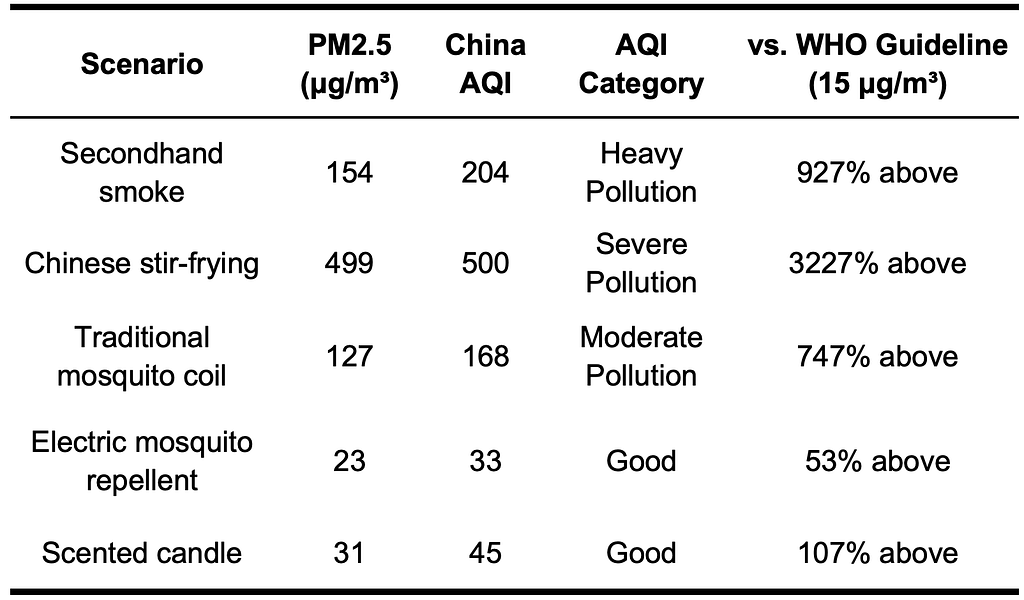
The experimental results are summarized below:
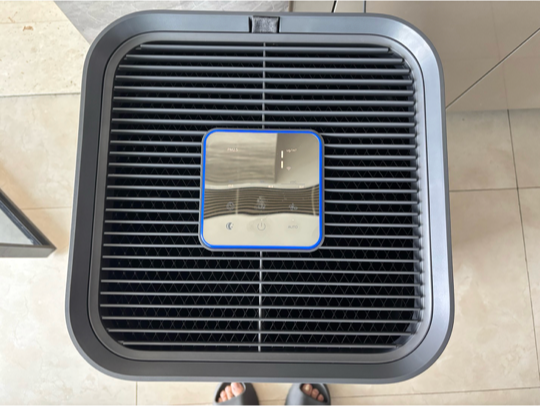
1) PrimeLab AQI Baseline
After opening the windows in the PrimeLab room at 8:00 a.m. for 30 minutes to ventilate, the HEPA purifier read 1 μg/m³.
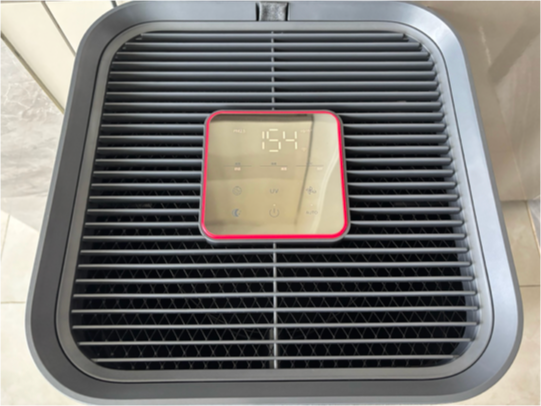
2) Secondhand smoke: reject all secondhand smoke exposure
After one full-size cigarette containing 5 mg of tar burned completely, the secondhand smoke it produced drove the indoor PM2.5 reading to a peak of 154 μg/m³, corresponding to China AQI 204 (heavy pollution) — 927% above the WHO standard. Even after falling back to 25 μg/m³, it remained at that level for about 20 minutes.
In daily life, you should avoid inhaling secondhand smoke whenever possible.
3) Chinese stir-fry kitchens: control the source before you talk about purification
Even with the window open and the range hood running at maximum power, the large volume of cooking-fume particles generated by stir-frying pushed the PM2.5 reading all the way up to 499 μg/m³, corresponding to China AQI 500 (severe pollution) — 3227% above the WHO standard.
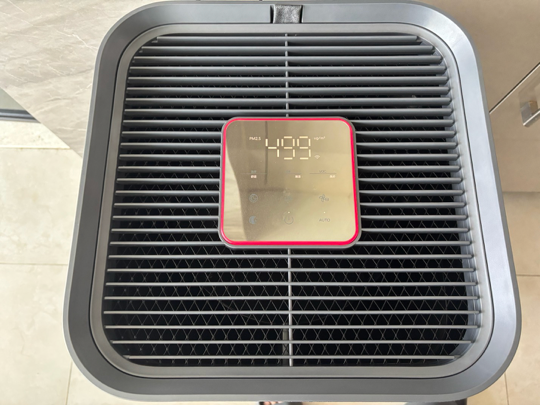
My advice is to avoid Chinese-style high-temperature cooking whenever possible. If you do need to cook this way, turn the range hood on early and off late, choose the right cooking oil, and wear a KN95 mask when necessary.
4) Mosquito coils vs. electric mosquito repellent liquid: low-intensity, long-duration, and easy-to-ignore “chronic particle sources”
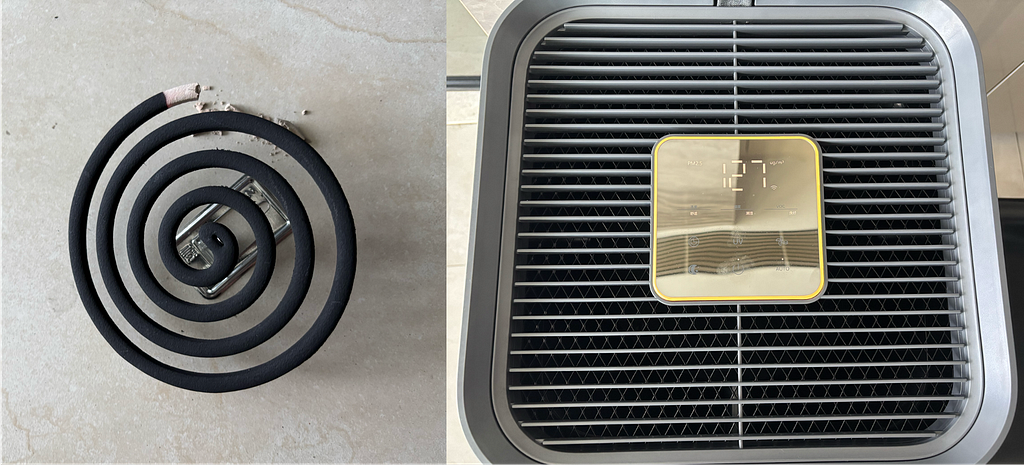
After a traditional mosquito coil burned for 20 minutes in a closed room, the PM2.5 reading reached 127 μg/m³, corresponding to China AQI 168 (moderate pollution) — 747% above the WHO standard.
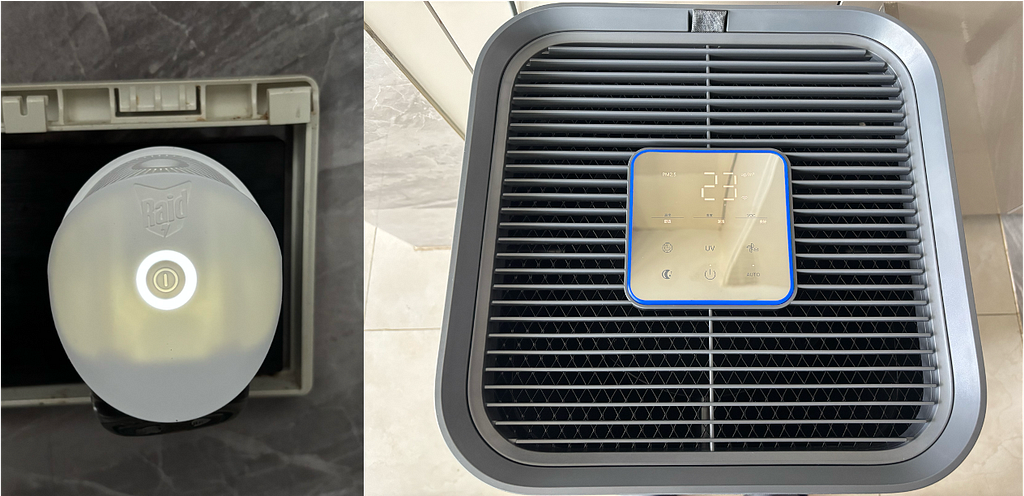
After an electric mosquito repellent liquid device had been running for 20 minutes, the PM2.5 reading reached 23 μg/m³, corresponding to China AQI 33 (Good) — 53% above the WHO standard.
Under real-life use conditions — say, left on overnight — a mosquito coil continues to release particulate matter, meaning elevated PM2.5 can persist for long periods. When needed, a non-toxic electric mosquito repellent liquid is the better substitute, together with appropriate ventilation.
5) Scented candles
After burning a candle for 20 minutes, the PM2.5 reading rose to 31 μg/m³, corresponding to China AQI 45 (Good) — 107% above the WHO standard.
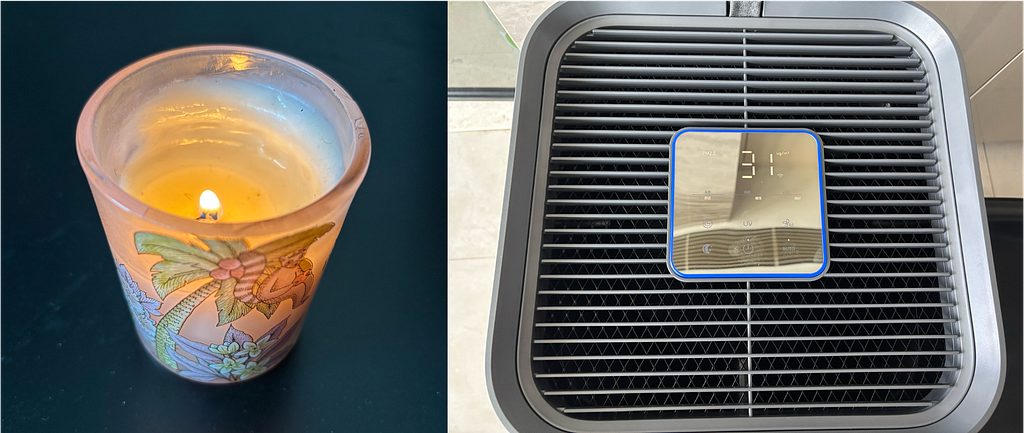
If you care about PM2.5, reducing open-flame burning matters more than switching to a “more premium” fragrance.
Intervention recommendations are geared toward generally healthy individuals. If you have existing health conditions, always follow your doctor’s instructions.
References
[1]U.S. Environmental Protection Agency. Particulate Matter (PM) Basics. Updated 2025 May 30.
[2]Jayaratne R, Liu X, Thai P, Dunbabin M, Morawska L. The influence of humidity on the performance of a low-cost air particle mass sensor and the effect of atmospheric fog. Atmos Meas Tech. 2018 Aug;11:4883–4890.
[3]Di Antonio A, Popoola OAM, Ouyang B, Saffell J, Jones RL. Developing a Relative Humidity Correction for Low-Cost Sensors Measuring Ambient Particulate Matter. Sensors (Basel). 2018 Sep;18(9):2790.