“Fructose is alcohol without the buzz. It doesn’t spike blood sugar, but might hurt you more quietly than glucose ever could.”
This was the central idea we laid out in our earlier essays —The Truth About Sugar: How Metabolic Detours Trigger a Lipid Crisis and Fructose: The Alcohol That Doesn’t Make You Drunk.
But science, by nature, is not static. Its power lies precisely in its ability to evolve.
Recently, We found ourselves revisiting fructose metabolism from a new angle — not because I doubted what I’d written, but because a reader asked a deceptively simple question:
“You said fructose goes 100% to the liver. Isn’t that an overstatement?”
That question stirred my curiosity.
So I dug back into the literature — starting with a pivotal 2018 study by Jang et al. in Cell Metabolism, and continuing through more recent work from 2019 to 2025 (notably by Wu, Ramirez, and others)[2–5]. These findings have gradually shifted the consensus away from the simplistic “fructose goes straight to the liver” narrative. What’s emerging is a more complex, nuanced map — one that depends on dose, form, and an elegant relay system between the small intestine, liver, and colon.
So today, I’d like to offer an updated perspective. We’re not reversing our overall assessment of fructose’s risks — but we do need to sharpen our understanding of one key variable:
Dose.
And that’s not just academic — it has very real implications for everyday choices, like how we eat fruit.
This is the Advanced Edition of our exploration into fructose.
Because science moves forward — and so should Prime Lab.
Bottom Line First: Low-Dose Fructose May Actually Be Beneficial
- Contrary to what many assume, fructose doesn’t immediately become liver fat the moment it enters your body. In fact, its first stop isn’t the liver at all — it’s the small intestine.
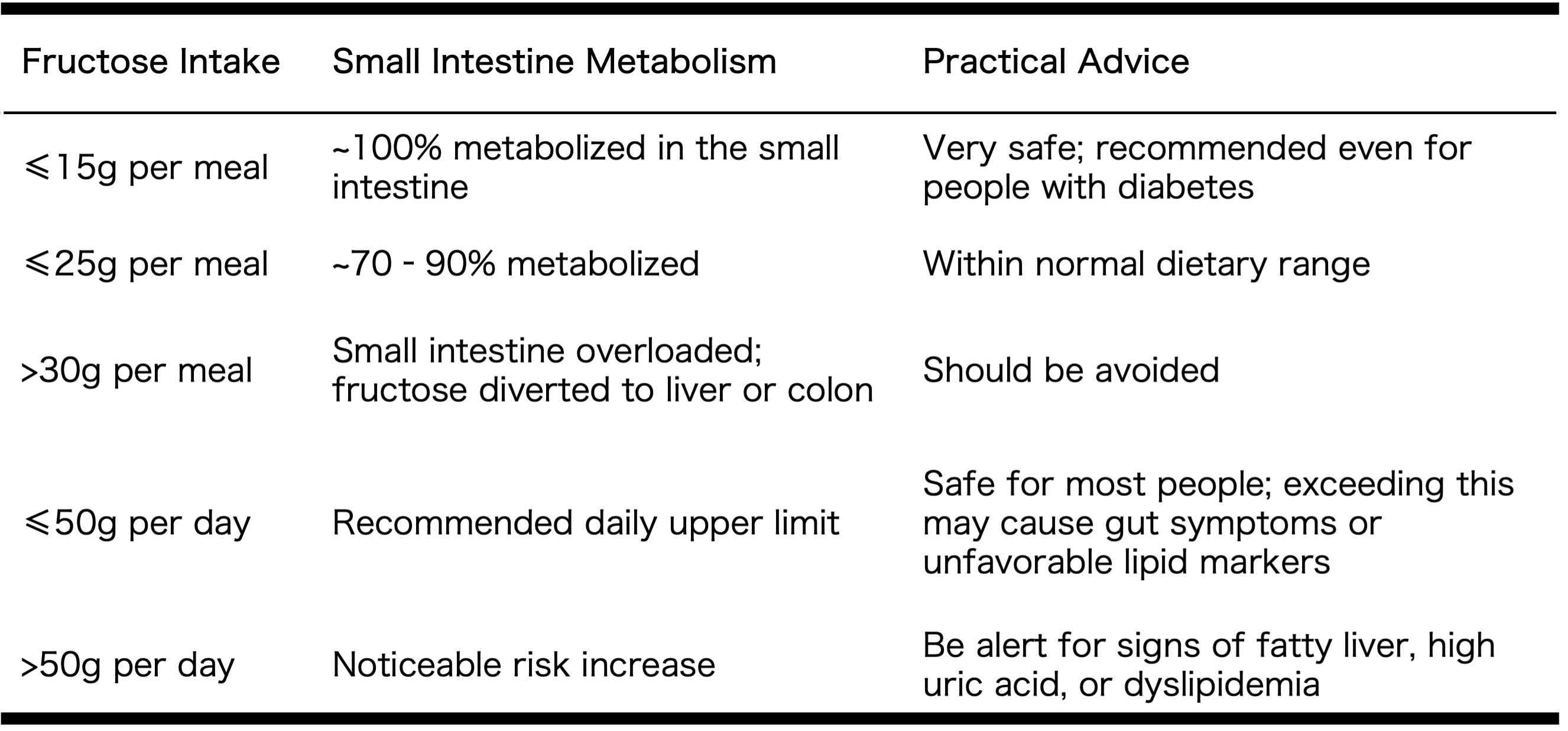
- If the amount of fructose consumed is relatively small (≤25g per meal, ≤50g per day), the small intestine handles most of it, converting it into energy substrates like lactate that are then used directly by muscles and other tissues. This process is fast, clean, and doesn’t raise blood glucose levels.
- Put another way: a small amount of fructose can actually be a gentle and efficient source of energy — more so than glucose, and without spiking blood sugar.
- The problem begins when fructose exceeds the capacity of the small intestine — especially in the form of free, unbound fructose. At that point, it spills over into the liver or colon, where it can kick off a cascade of problems: fat production, inflammation, microbiome disruption, and more.
The Path of Fructose: Small Intestine First, Then Liver (If Overloaded)
🍽 Fructose doesn’t head straight for the liver. It first passes a checkpoint: the small intestine.
Unlike glucose, fructose follows a different metabolic route entirely[6–9].

If your intake stays below ~25g per meal, the small intestine can convert nearly all of it into:
- Lactate: A highly efficient energy source used by the heart and skeletal muscles.
- Glucose: A small portion is released into the bloodstream.
- Local fuel: Some is used to maintain intestinal function.
- Glycerate: We'll discuss it later.
Crucially, lactate is the main product of this process. So to understand whether fructose is “good” or “bad” at this stage, we need to re-examine how we view lactate.
❗️The Misunderstood Molecule: Lactate Isn’t the Enemy
Lactate has a bad reputation. Most people associate it with sore muscles and post-workout fatigue. But that’s not the full story[10–12]:
- The real culprit behind muscle soreness is microtrauma and inflammation, not lactate.
- Lactate is actually a rescue molecule — a backup fuel when oxygen or glucose runs low.
- Your heart and muscles love lactate. They use it readily.
- Lactate can be oxidized quickly and usually doesn’t raise blood sugar.
That said, chronically high lactate can interfere with uric acid clearance, leading to elevated uric acid levels — but this only occurs under extreme conditions (like intense exercise or massive fructose overload).
For most people, especially when fructose is consumed in whole fruit form, lactate builds slowly, and this risk is minimal.
So the takeaway here is important:
Fructose from whole fruit is safe. There’s no need for panic.
🧪 Why Is Fructose So “Easy to Lose Control”?
Another unique feature of fructose is that it bypasses the key regulatory checkpoint in glucose metabolism — PFK (phosphofructokinase).
This enzyme acts as the central “decision-maker” in our body, determining whether to continue energy production. When ATP is abundant, it hits the brakes; when AMP levels rise, it signals the need to accelerate.
ATP (adenosine triphosphate) is the cell’s “energy currency,” indicating a well-fed, energy-rich state. As energy is consumed, ATP is sequentially broken down into ADP (adenosine diphosphate) and then AMP (adenosine monophosphate). AMP serves as an “energy alarm,” flagging the need for more energy production. In both the small intestine and liver, PFK senses the ratio of ATP to AMP, acting as a metabolic gatekeeper that controls whether sugar should continue to be broken down for energy [13–15].
But fructose doesn’t play by the rules:
- In the small intestine, it’s rapidly converted into lactate.
- In the liver, it bypasses all the usual checks and flows straight into the fat synthesis pathway — with zero restraint.
This means that once fructose hits the liver, it’s like slamming the gas pedal with no brakes:
Fat production (especially palmitic acid), uric acid generation, and inflammation all kick off almost instantly.
🚨 The Risks of Hepatic Fructose Metabolism [16–19] (covered earlier, not repeated here):
- Fat synthesis → Non-alcoholic fatty liver disease (NAFLD);
- ATP depletion → Elevated uric acid levels;
- Inflammatory activation → Insulin resistance, chronic inflammation.
This is why fructose has long been labeled a “chronic disease culprit.” But here’s the key: these harmful effects only emerge when the small intestine’s metabolic capacity is exceeded.
🤯 Excess Fructose Can Spill into the Colon — and Stir Up More Trouble
Let’s say you chug a bottle of coke (high in free fructose) in five minutes.
You’ve likely surpassed your intestine’s processing limit.
Some of that unmetabolized fructose ends up in the colon, where your microbiota ferment it into acetic acid, gas, and sometimes toxins[20–22].
- A bit of acetic acid? Not bad — might even be beneficial.
- But large, rapid doses? Can disrupt your microbiome.
This is especially true for individuals with Irritable Bowel Syndrome (IBS), for whom this type of fructose (a FODMAP) is more likely to trigger bloating and diarrhea.
FODMAP stands for Fermentable Oligo-, Di-, Monosaccharides and Polyols — a group of short-chain carbohydrates that are poorly absorbed in the small intestine and rapidly fermented by gut bacteria in the colon. For people with IBS, high-FODMAP foods — such as free fructose, lactose, certain legumes, and artificial sweeteners — are more likely to cause symptoms like bloating, abdominal pain, and diarrhea 23.
🏋️♂️ In the Right Dose, Fructose Can Be a Secret Weapon
And now for the plot twist:
Because fructose is rapidly metabolized and doesn’t spike glucose, it can be a strategic energy source in the right context.
Take post-workout recovery. A banana, rich in both glucose and fructose, might outperform your standard sugary drink:
- Glucose replenishes glycogen and triggers insulin for muscle growth.
- Fructose becomes lactate, which fuels the heart and muscles.
- The combo supports energy needs without crashing your blood sugar.
As long as the total intake is well controlled, fructose holds just as much potential in sports nutrition as mainstream carbohydrate supplements.
Even if your fructose intake slightly exceeds the “safe zone,” the liver often stores it as glycogen, not fat — especially if you’re active.
Only when liver glycogen stores are nearly full does fructose tip into fat production.
So Where Does That Leave Us?
🍎 How Much Fructose Is Safe? ≤15g per meal, ≤50g per day
After reviewing a broad range of studies, we’ve compiled the evidence to define a safe intake threshold for daily fructose [24–30]37,38:
✅ Recommended Source: Whole Fruit
Fructose from whole fruits is a “slow-release” version equipped with a built-in safety cushion31,32:
- Natural shield: Fiber, polyphenols, potassium, and other nutrients slow down fructose absorption;
- Reduced metabolic shock: Gradual uptake buffers the risks associated with fructose metabolism;
- Smart substitution: Replacing part of your high-GI carbs with fruit can help smooth out blood sugar fluctuations.
Suggested intake reference:
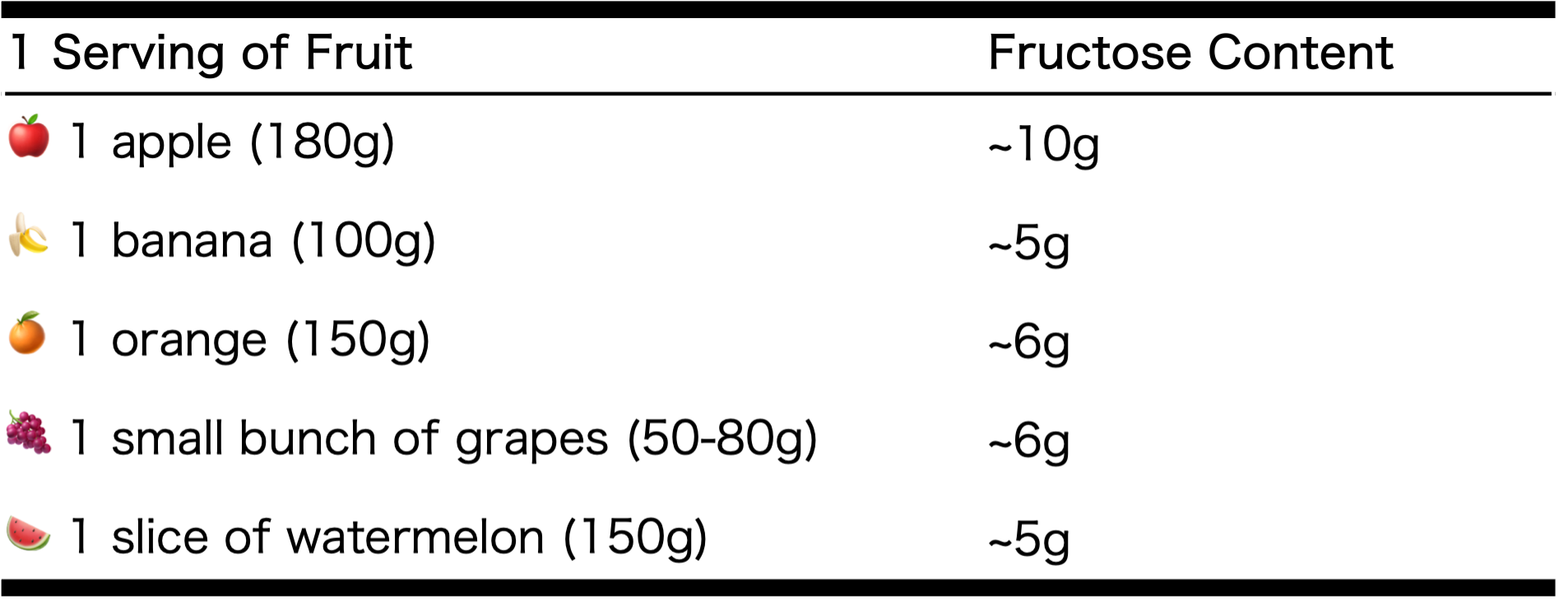
Eating 2–3 servings of whole fruit per day will typically keep your total fructose intake in the 30–50g range — well within the safe zone.
Even from a purely fructose perspective, up to 5 servings of whole fruit a day can still be handled by the small intestine in most cases. Thanks to the buffering effect of dietary fiber, any fructose that does end up in the liver or colon is released more slowly, posing minimal strain. And if these 5 servings are replacing high-GI carbohydrates, they still bring significant net benefit.
❌ Fructose Sources to Avoid:
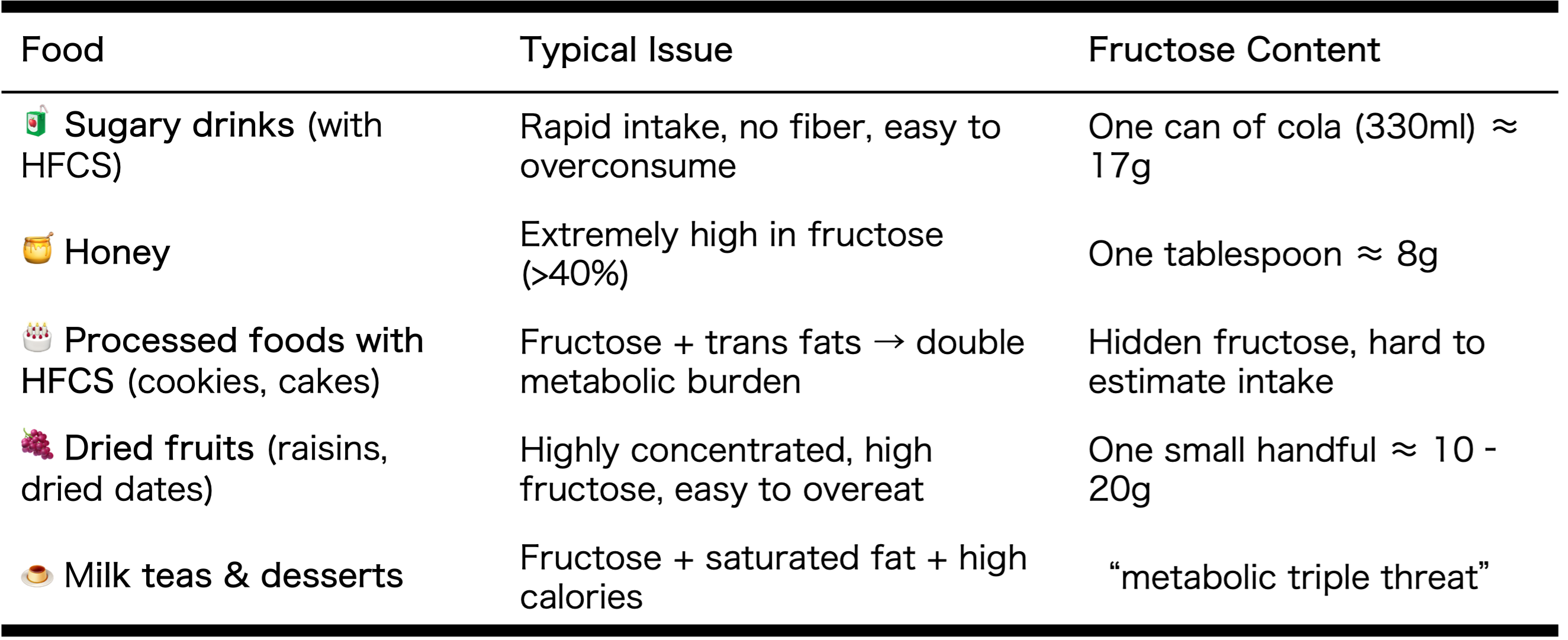
A simple rule of thumb:
If it doesn’t require chewing or takes no effort to consume, be cautious.
🧠 Special Considerations for Specific Populations

The “Hidden Risks” of Fructose — Don’t Overlook Them
1. Glycerate Formation [2–5]
- After being metabolized in the small intestine, a portion of fructose is converted to glycerate;
- Animal studies suggest that high-fat, high-fructose diets with elevated glycerate exposure may impair pancreatic β-cell function, reducing insulin secretion;
- While human data is still limited, the threshold for harm appears relatively high. And given whole fruit’s slow-release nature, regular fruit consumption is unlikely to pose a health risk in this regard.
2. Colon Acetic Acid & Microbiome Disruption [20–22]
- Excess free fructose can enter the colon and be rapidly fermented into acetic acid;
- While acetic acid itself isn’t harmful, too much, too quickly can alter the metabolic environment;
- On one hand, acetic acid can fuel de novo lipogenesis (DNL) in the liver;
- On the other, excessive acetic acid may shift the microbiome’s balance → increasing inflammatory permeability and metabolic risk. In other words, too much of a good thing becomes bad.
3. Fructose and the Brain’s Reward Loop 33,34
- Fructose has been shown to activate the brain’s reward circuitry, increasing appetite and food-seeking behavior;
- Johnson’s group (Philosophical Transactions B, 2023) suggests that fructose may act as a “foraging signal” — the more you eat, the more you crave.
4. Individual Variability in Fructose Tolerance 35,36
- People with IBS, weakened intestinal barriers, or low GLUT5 transporter expression often have lower fructose tolerance;
- According to the FODMAP framework, free fructose is considered a high-risk carbohydrate, especially for those with sensitive guts.
In Summary:
- Small, slow-release doses of fructose (<25g/meal) are mainly metabolized in the small intestine, yielding mild, non-glycemic byproducts;
- Excess intake is the real issue — it spills over to the liver (→ fat) or colon (→ gas and toxins);
- Whole fruit is safe, free fructose is harmful;
- Around physical activity, fructose can be an efficient, gentle energy source.
Intervention recommendations are geared toward generally healthy individuals. If you have existing health conditions, always follow your doctor’s instructions.
References37
[1]AI Research
[2]Jang, Cholsoon, et al. “The Small Intestine Converts Dietary Fructose into Glucose and Organic Acids.” Cell Metabolism, vol. 27, no. 2, 2018, pp. 351–361.e3.
[3]Jang, Cholsoon, et al. “The Small Intestine Shields the Liver from Fructose-Induced Steatosis.” Cell Metabolism, vol. 32, no. 5, 2020, pp. 801–812.e6.
[4]Wu, Yanru, et al. “Glycerate from Intestinal Fructose Metabolism Induces Islet Cell Damage and Glucose Intolerance.” Cell Metabolism, vol. 34, no. 7, 2022, pp. 1042–1053.e6.
[5]Ramírez, Carlos B., et al. “Circulating Glycerate Predicts Resilience to Fructose-Induced Metabolic Disorder in Humans.” Cell Metabolism, 2025.
[6]Chadt, Anja, and Sulayman Al-Hasani. “Glucose Transporters in Adipose Tissue, Liver, and Skeletal Muscle.” Frontiers in Physiology, 2020.
[7]Petersen, M. C., and G. I. Shulman. “Regulation of Hepatic Glucose Metabolism in Health and Disease.” Nature Reviews Endocrinology, 2017.
[8]Herman, M. A., and R. J. Samuel. “Molecular Aspects of Fructose Metabolism and Metabolic Disease.” Cell Metabolism, 2021.
[9]Jang, Cholsoon, et al. “The Small Intestine Converts Dietary Fructose into Glucose and Organic Acids.” Cell Metabolism, 2018.
[10]Hui, S., et al. “Glucose Feeds the TCA Cycle via Circulating Lactate.” Nature, 2017.
[11]Ouyang, J., et al. “The Role of Lactate in Cardiovascular Diseases.” Frontiers in Cardiovascular Medicine, 2023.
[12]Li, X., et al. “Lactate Metabolism in Human Health and Disease.” Signal Transduction and Targeted Therapy, 2022. [13]Lynch, E. M., et al. “Structural Basis for Allosteric Regulation of Human Phosphofructokinase-1.” Nature Communications, 2024.
[14]Wang, C., et al. “Analysis of Phosphofructokinase-1 Activity as Affected by Its Effectors.” International Journal of Molecular Sciences, 2024.
[15]Campos, M., et al. “Hitting the Sweet Spot: How Glucose Metabolism Is Tightly Tuned in Cancer.” Cancers, 2023.
[16]Softic, S., et al. “Divergent Effects of Glucose and Fructose on Hepatic Lipogenesis and Insulin Signaling.” JCI, 2017.
[17]Taskinen, M.-R., et al. “Dietary Fructose and the Metabolic Syndrome.” Nutrients, 2019.
[18]Russo, E., et al. “Fructose and Uric Acid: Major Mediators of CVD.” Nutrients, 2020.
[19]Johnson, R. J., et al. “The Fructose Survival Hypothesis for Obesity.” Philosophical Transactions B, 2023.
[20]Jang, C., et al. “The Small Intestine Converts Dietary Fructose into Glucose and Organic Acids.” Cell Metabolism, 2018.
[21]Francey, C., et al. “Extra-Splanchnic Fructose Escape after a Fructose-Glucose Drink (Dual Isotope).” Clin Nutr ESPEN, 2019.
[22]Zhao, S., et al. “Dietary Fructose Feeds Hepatic Lipogenesis via Microbiota-Derived Acetate.” Nature, 2020
[23]“What are FODMAPs?” Cleveland Clinic, 2022.
[24]Rao, S. S. C., et al. “Ability of the Normal Human Small Intestine to Absorb Fructose: Evaluation by Breath Testing.”Clinical Gastroenterology and Hepatology, 2007.
[25]Ebert, K., et al. “Fructose Malabsorption.” Molecular and Cellular Pediatrics, 2016.
[26]Francey, C., et al. “Extra-Splanchnic Fructose Escape after a Fructose-Glucose Drink…” Clin Nutr ESPEN, 2019.
[27]World Health Organization. Guideline: Sugars Intake for Adults and Children. WHO, 2023.
[28]Tappy, L., et al. “Health Effects of Fructose and Fructose-Containing Caloric Sweeteners.” Journal of the American College of Cardiology, 2015.
[29]Chen, H., et al. “SSB Consumption and NAFLD: A Dose-Response Meta-analysis.” IJERPH, 2019.
[30]Malik, V. S., et al. “The Role of SSBs in the Global Epidemic.” Nature Reviews Endocrinology, 2022.
[31]Dreher, Mark L. “Whole Fruits and Fruit Fiber: Emerging Health Effects.” Nutrients, 2018.
[32]Muraki, Isao, et al. “Fruit Consumption and Risk of Type 2 Diabetes.” BMJ, 2013.
[33]Page, Kathleen A., et al. “Effects of Fructose vs Glucose on Regional Cerebral Blood Flow.” JAMA, 2013.
[34]Johnson, Richard J., et al. “The Fructose Survival Hypothesis for Obesity.” Philosophical Transactions B, 2023.
[35]Sia, T., et al. “Fructose Malabsorption and Fructan Malabsorption in IBS Using HBT.” BMC Gastroenterology, 2024.
[36]Monash University. “High and Low FODMAP Foods.” 2024 updated;“The Facts about Glucose and Fructose.” 2016.
[37]Maersk, Maria et al. “Sucrose-sweetened beverages increase fat storage in the liver, muscle, and visceral fat depot: a 6-mo randomized intervention study.” The American journal of clinical nutrition vol. 95,2 (2012): 283–9.
[38]Geidl-Flueck, Bettina et al. “Fructose- and sucrose- but not glucose-sweetened beverages promote hepatic de novo lipogenesis: A randomized controlled trial.”Journal of hepatology vol. 75,1 (2021): 46–54.